Most couch to half marathon plans you find online quietly assume you can already jog for 30 minutes without stopping. If that is not you, those plans are not lying – they are just talking to somebody else. Going from the sofa to 21.1 km when you have never really run before is a months-long project, not a 12-week sprint. Done properly, it is one of the most satisfying things a non-runner can do. Done in a rush, it is the fastest route to shin splints.

This guide lays out an honest couch to half marathon path for someone starting from genuine zero. No assumed base. No pretending walk breaks are cheating. Just a five-phase structure that gets you to the finish line with your knees, ankles and motivation intact.
What “Couch” Actually Means Here
If you can comfortably run 5 km right now, you are not on the couch – you are already on the path. This guide is for someone who has not run regularly in years, or ever. You might walk the dog and feel reasonably healthy, but running for two minutes leaves your lungs burning and your calves complaining. That is the starting line.
Two truths matter before you start. Your cardiovascular system adapts fast – within four to six weeks you will feel noticeably less out of breath. Your tendons, ligaments and bones adapt slowly. Research from the British Journal of Sports Medicine shows connective tissue takes six to nine months to fully adapt to repeated impact loading in new runners (Nielsen et al., 2014). Your lungs will write cheques your shins cannot cash for a while. The whole point of a long ramp-up is to let the slow tissues catch up with the fast ones.
Why Months, Not Weeks, Is the Honest Answer
The internet is full of “12 weeks to a half marathon” plans. They work for people with a base. For a true beginner, 12 weeks is the time it takes to build the base, not the time it takes to race. A realistic couch to half marathon timeline sits between 26 and 40 weeks – six to nine months – depending on your age, weight, history of activity and how often you can train.
A study in Sports Medicine tracking novice runners over their first year found injury rates spiked dramatically when weekly mileage increased by more than 30% across any four-week block (Buist et al., 2010). Runners who built up gradually had a completion rate roughly three times higher than those following aggressive plans. The slow road is also the fast road, because the fast road keeps dumping you in the physio’s waiting room.
Start With Couch to 5K, Not Half Marathon

The single best decision a true beginner can make is to forget the half marathon for the first 9 to 12 weeks and follow a proper couch to 5K programme first. A 5K base gives you three things you cannot skip: a body that handles 30 minutes of continuous running, a habit that survives bad weather and busy weeks, and a clear yardstick to set realistic half marathon paces from.
Trying to jump straight to half marathon training from zero is like trying to learn algebra without learning to count. Possible in theory. Painful in practice. Once you have run a 5 km without stopping – even slowly – you are no longer on the couch. You are a beginner runner with a base. That is when the half marathon plan starts.
The Five-Phase Couch to Half Marathon Structure
Here is what a realistic from couch to half marathon journey looks like, broken into five phases. Total time: roughly 28 to 36 weeks, depending on how cleanly each phase goes.
Phase 1 – Build the walk/run base (weeks 1 to 9)
This is pure couch to 5K territory. Three sessions a week. Each session is 20 to 30 minutes of alternating walking and running, with the running intervals slowly getting longer. By week 9, you should be running 30 minutes continuously, covering roughly 4 to 5 km. If you finish this phase and your shins still hurt, repeat the final two weeks. There is no prize for moving on early.
Phase 2 – Consolidate the 5K (weeks 10 to 13)
Spend four weeks just running 5K comfortably, three to four times a week. No new distance. No speed work. Add an easy 10-minute extension to one run per week so you finish this phase running 6 to 7 km on your longest day. This is where running stops feeling like a punishment and starts feeling like a habit.
Phase 3 – Build to 10K (weeks 14 to 21)
Now you are training. Four runs a week: two easy 5 km runs, one slightly faster 4 km, and one long run growing from 7 km to 10 km over eight weeks. By week 21 you can run 10 km, even if slowly. The RunReps Running Plan Generator sequences the distances and recovery weeks so you are not guessing.
Phase 4 – Half marathon build (weeks 22 to 32)
This is the part that looks like a normal half marathon plan. Four runs a week. One long run growing from 11 km to 18 km over ten weeks, with a step-back week every fourth week where you drop the long run by 25 to 30%. One slightly faster session – tempo or relaxed intervals. Two easy runs. By the final long run, 18 km should feel hard but doable. You do not need to run the full 21.1 km in training.
Phase 5 – Taper and race (weeks 33 to 34)
Cut your weekly distance by 30% in week one of the taper, and by 50% in race week. Keep the frequency the same – just shorter runs. Sleep more, eat normally, and resist the urge to “test” your fitness. The training is in the bank.
Why Walk/Run Intervals Are Not Cheating
Walking breaks have a branding problem. Beginners see them as a sign of failure when in reality they are one of the most effective tools in distance running. Jeff Galloway, the American Olympian who popularised the run/walk method, has helped more first-time half marathon finishers than almost any other coach alive. His method works because it manages cumulative fatigue: short walk breaks let your heart rate drop, your form reset and your legs flush metabolites before they accumulate into the wall of misery at kilometre 15.
A practical approach for beginners: run for four minutes, walk for one. Or run for two minutes, walk for 30 seconds. Pick a ratio you can sustain and use it from day one. As your fitness grows, the running intervals get longer until – if you choose – the walking breaks disappear entirely. Plenty of seasoned runners stick with walk breaks for life and finish faster than runners who try to run the whole way and blow up at 14 km. If your race goal is a specific time, a pace calculator helps you check whether walk breaks fit inside your target finish.
The First Three Weeks: What Phase 1 Actually Looks Like
Here is what the first three weeks of phase one look like in practice for an adult beginner who has not run since school.
Week 1. Three sessions of 20 to 25 minutes. Start with a steady walk on day one just to see how the knees feel the next day. The second and third sessions alternate one minute of slow jogging with two minutes of walking. The first time out always feels exposed. The second one feels less so. The third one starts to feel like a habit.
Week 2. Three sessions, each 25 minutes. Run intervals up to 90 seconds. If a calf or shin niggle shows up by the weekend, swap a session for a swim or a longer walk. Rest days are part of the plan, not a failure of it.
Week 3. Three sessions of 25 to 30 minutes. Run intervals up to two minutes. The third session of the week often feels almost easy – not “fit” easy, but “I can see this working” easy. That is the moment most beginners need.
The Beginner Mistakes That Kill Most Plans
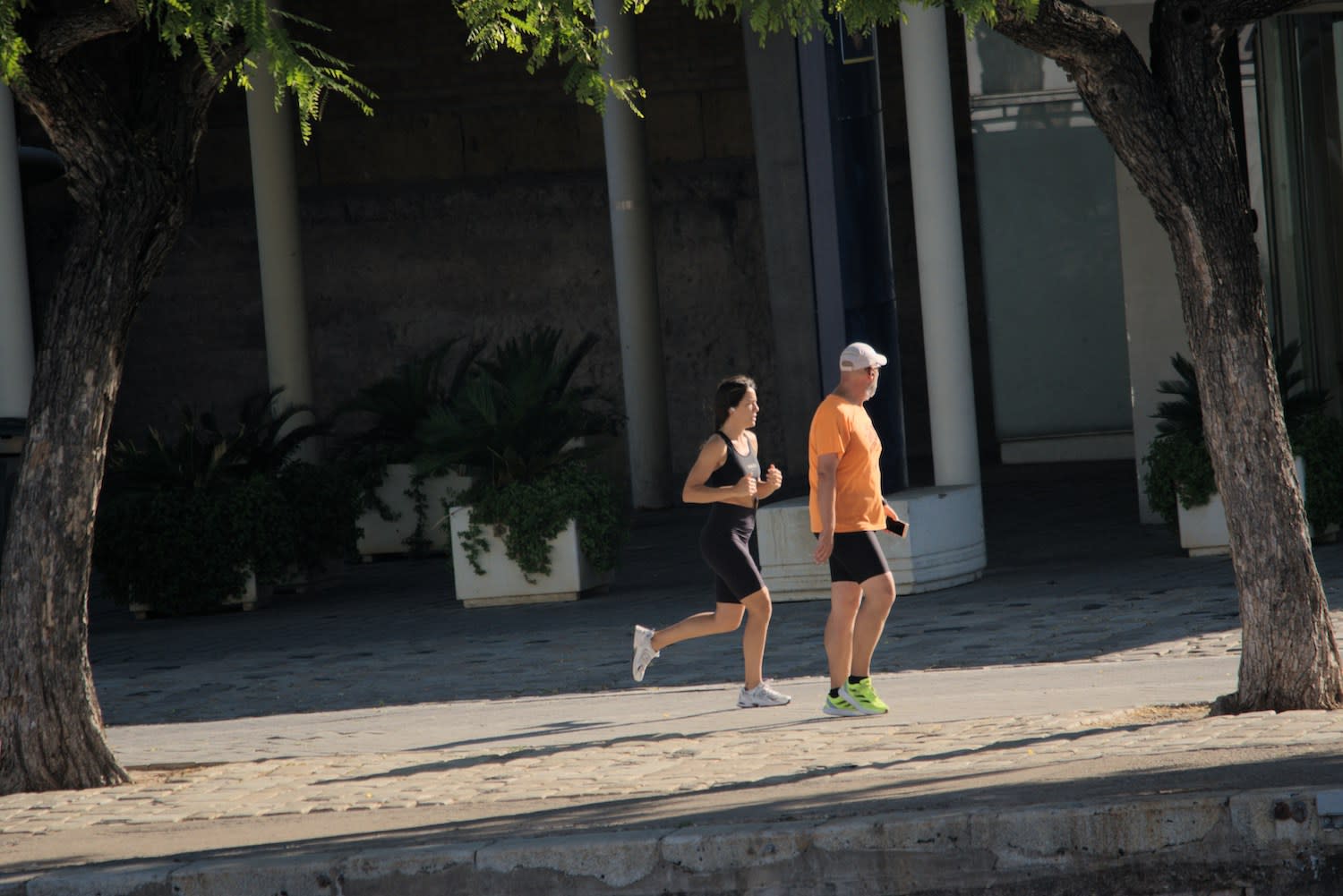
Almost every beginner who fails to reach the start line falls into the same traps.
- Too fast on easy runs. If you cannot hold a full sentence while running, you are running too fast. Easy runs build the engine. Hard easy runs build injuries.
- Too much, too soon. Doubling your mileage because last week felt good. Exceed the 10% rule consistently and your tendons will eventually file a complaint.
- Skipping recovery weeks. Beginners often feel strongest right before they break. Drop your volume every fourth week.
- Not strength training. Two short sessions a week of squats, lunges, calf raises and glute bridges cut injury risk significantly in new runners. Ten minutes after a run is enough.
- Comparing yourself to runners on Strava. Their easy pace is your tempo pace. None of it is relevant. Your only competitor is the version of you that did not start.
Showing Up When You Do Not Feel Like a Runner
The hardest part of a couch to half marathon journey is not physical. It is the gap between identity and behaviour. For the first three months, you will feel like someone who runs sometimes, badly, and hopes no one is watching. This is normal. Identity follows action. Run for long enough and one morning you will catch yourself saying “I am going for a run after work” without flinching. That is the day it sticks.
Three practical anchors help. Lay your kit out the night before so the morning decision is “put it on” rather than “should I”. Have two or three days a week that are non-negotiable – same time, same days, no debate. And track your sessions somewhere visible. A wall calendar with a tick for every completed run is primitive and absolutely works.
When to Use a Structured Plan vs Winging It
You can wing the first 5K. The distances are short and the consequences of a small mistake are small. From phase three onwards, structure matters. Recovery weeks, progression rates and taper timing get hard to manage in your head once your long run is north of 12 km. The RunReps training plans are built for the journey from 5K base to half marathon, with progression and recovery sequenced for beginners rather than elite runners. You enter your goal race date, your current weekly distance and the days you can run. The plan handles the rest.
Questions Beginners Ask About Couch to Half Marathon
How long does couch to half marathon really take?
For a true beginner with no running base, plan for six to nine months from your first walk/run session to the start line. Faster than six months is possible if you are young, light and already active, but the injury risk rises sharply. The “12 week half marathon plan” you see advertised everywhere assumes you can already run 5 km comfortably. Build that base first, then graduate into a structured 16 week half marathon training plan for the race build itself.
Is couch to half marathon training for beginners safe at any age?
For most healthy adults, yes – but you should clear it with your GP if you are over 40, have a history of heart or joint issues, or have been very sedentary for years. The bigger safety question is not “should I run” but “how fast should I build up”. Slow progression, walking breaks and at least one full rest day a week make beginner half marathon training accessible well into your sixties and beyond.
Do I need to run 21.1 km in training before race day?
No. Most beginner half marathon training plans top out at 16 to 18 km on the longest run. The taper, the race-day adrenaline and the crowd carry you through the final 3 to 5 km. Running the full distance in training adds fatigue without adding fitness, and increases injury risk in the worst possible week.
What is a realistic finish time for a first half marathon?
For a true couch to half marathon journey, anywhere between 2:15 and 2:45 is a sensible target if you are running consistently in training. Walk/run finishers often land between 2:30 and 3:00. Forget the time goal for your first race – finish strong, enjoy the experience, and use the result to set a real time target for race two.
How many days a week should a beginner run?
Three days a week is the sweet spot for beginners through phases one and two. Add a fourth day in phase three when your long run is over 8 km and your body has adapted. Five or more days a week is rarely necessary for first-time half marathoners and significantly increases injury risk in new runners.
This article is for informational purposes only and does not constitute medical advice. If you are new to running, returning after injury, or have any underlying health conditions, consult a qualified healthcare professional before starting a new training programme.
Starter gear for new runners
You do not need much to start running, but a few well-chosen items make the experience better and help you stick with it.
Brooks Ghost
Balanced cushioning, a comfortable fit, and a forgiving ride. One of the most recommended shoes for new runners.
View on AmazonGarmin Forerunner 255
Simple to use with accurate GPS tracking. Helps you build consistency by seeing your pace and distance improve over time.
View on AmazonFoam Roller
Reduces muscle soreness after runs and helps prevent common beginner injuries. A few minutes of rolling goes a long way.
View on AmazonGarmin Forerunner 265
Track every session with live pace data, training load metrics, and recovery advice. The best mid-range GPS watch.
View on Amazon
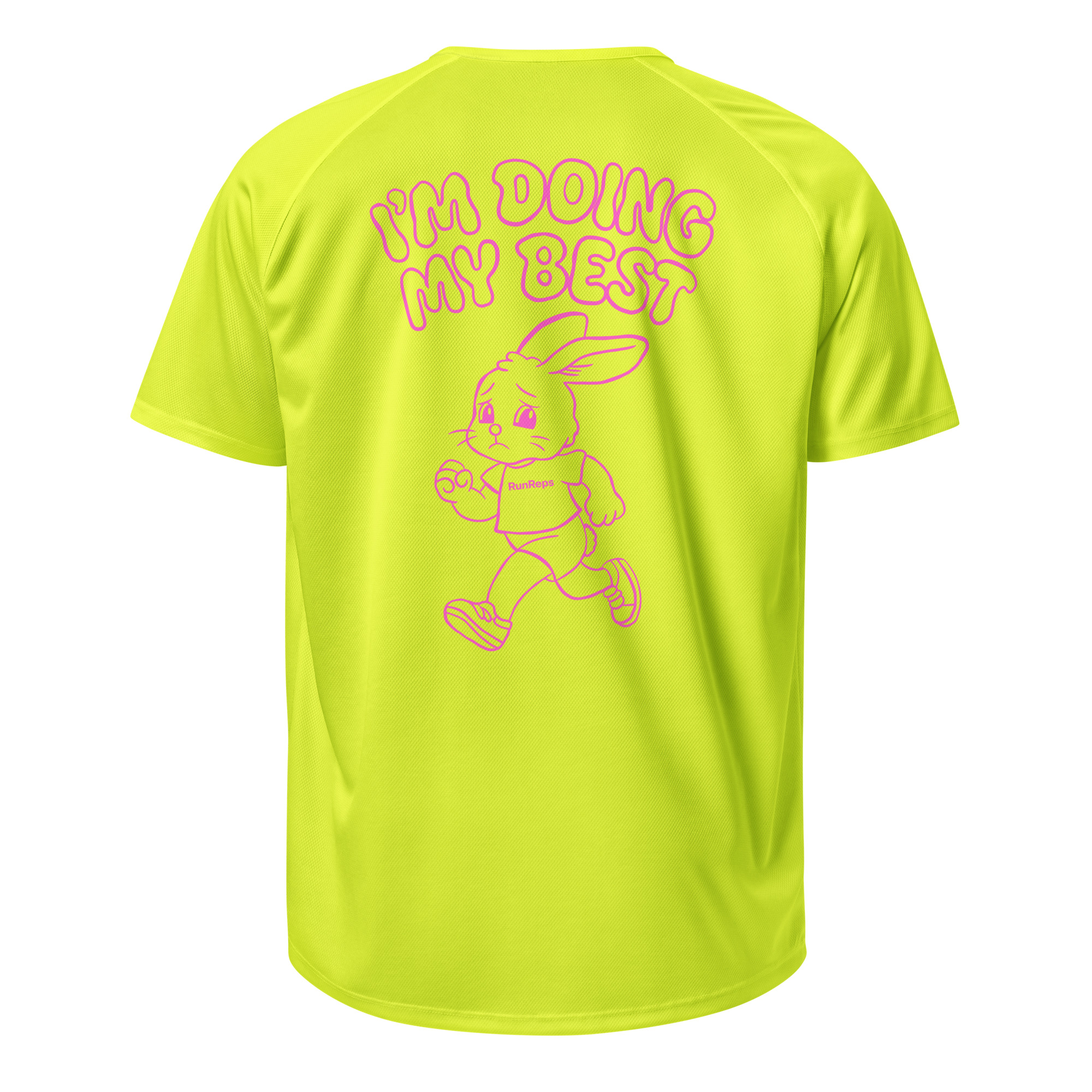
I'm Doing My Best Running Jersey
Lightweight, breathable unisex sports jersey in neon yellow. Designed for runners who keep showing up.
Free worldwide shipping on select orders
RunReps works with retail partners through the Awin affiliate network and earns a commission on qualifying purchases at no extra cost to you.