Open the relaunched parkrun app for the first time and you are met with a wall of badges. There are the familiar parkrun milestones, the t-shirt clubs you have probably heard runners talk about in the finish funnel, and then there are 34 challenges with names like Stopwatch Bingo, The Full Ponty and Old MacDonald. Most parkrunners scroll past them with no idea what half of them mean. This guide explains every one: the milestone clubs and their t-shirts, all 34 in-app challenges grouped so they actually make sense, and the stats like the p-index that trip up even regular tourists.

None of it is complicated once someone lays it out plainly. By the end you will know exactly which badges you are quietly already working towards, which ones are worth chasing, and how to turn the times the app records into training goals that make you faster.
Milestones versus challenges: what the difference actually is
The single most common point of confusion is that “milestones” and “challenges” are not the same thing, and the app treats them differently. Get this distinction clear and everything else falls into place.
Milestones are the official clubs based on how many times you have finished or volunteered. Reach one and you join the milestone club: parkrun puts a milestone icon next to your name in the results, and you unlock the matching milestone t-shirt, which you buy from the official parkrun shop. They are counted automatically, they never expire, and walking counts exactly the same as running. These are the achievements with proper club status attached.
Challenges are the 34 goals built into the app. There is no t-shirt and no physical prize. The app simply tracks your progress towards each one with a badge and a percentage bar, and the satisfaction is in completing them. Some take a single Saturday, others take a lifetime. Then there are a handful of stats, like the parkrun p-index, that are not challenges at all but numbers the app calculates from your history. We will cover all three.
The milestone clubs, run by run

parkrun milestones are the backbone of the whole system, and they are the achievements most worth understanding first because each one unlocks a milestone t-shirt you will actually wear. There are three separate tracks: adult 5 km events, junior 2 km events, and volunteering.
For adult 5 km parkruns, the milestone clubs and their t-shirt colours are:
- 25 parkruns – purple shirt. The newest club, added so newer runners reach a reward sooner.
- 50 parkruns – red shirt.
- 100 parkruns – black shirt, and the one most runners treat as the big one.
- 250 parkruns – green shirt.
- 500 parkruns – blue shirt, and a genuinely rare sight in any finish funnel.
Two things surprise people. First, walking counts. A run/walk or a full walk around the course earns milestone credit exactly like a run, which is why parkrun is so welcoming to people coming back from injury or starting from the sofa. Second, the count is for total finishes, not different locations, so you can reach 100 entirely at your home event.
Junior parkrun, the separate 2 km event for 4 to 14 year olds on Sunday mornings, has its own milestones marked with coloured wristbands rather than shirts. Juniors join the half marathon club at 11 finishes (eleven 2 km runs adds up to roughly a half marathon of distance), the marathon club at 21, then clubs at 50, 100 and 250. Volunteering has its own ladder too, unlocking a milestone t-shirt at 25 volunteer occasions and further milestones at 50, 100, 250 and 500. Marshalling, scanning barcodes or tail walking all count, so you can earn a milestone without running a step.
Collecting different parkruns: the tourism challenges

The first group of parkrun challenges rewards variety: getting to different events rather than racking up runs at one. This is the world of parkrun tourism, and it is where most of the badge-chasing energy goes.
- Tourist – attend 20 different parkrun locations. The entry point to tourism and the one most regulars complete without trying.
- Tourist Streak – attend five different locations in a row, with no repeats in between. A test of planning more than mileage.
- Explorer 100 – attend 100 different locations. A serious multi-year commitment.
- Explorer 250 – attend 250 different locations. The realm of the dedicated tourist.
- Single-Ton – complete 100 parkruns at the same location. The opposite philosophy: loyalty to one event.
- Double-Ton – complete 200 parkruns at the same location. Two hundred Saturdays at one course is a remarkable show of consistency.
Spelling words and chasing letters with event names
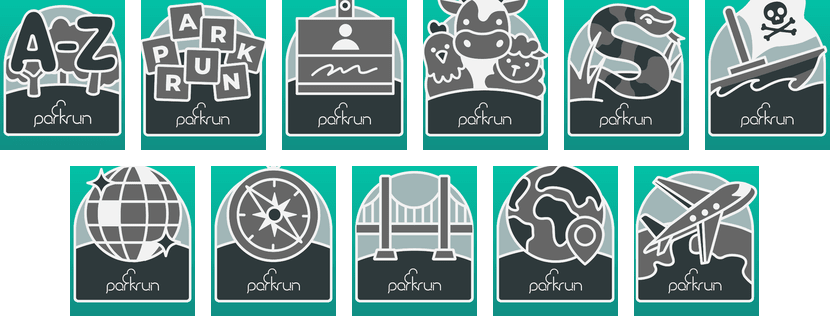
The largest group of challenges turns the parkrun map into a word game. Each one asks you to collect events whose names begin with particular letters, which is why dedicated tourists end up driving past three closer events to reach the one starting with Q.
- Alphabeteer – attend a parkrun starting with every letter of the alphabet except X. The classic, and a years-long quest for most.
- parkrun – attend events starting with each letter of the word parkrun: P, A, R, K, R, U, N. A friendlier seven-event version of the alphabet challenge.
- Namely – attend a parkrun starting with every letter of your own name. Difficulty depends entirely on what your parents called you.
- Old MacDonald – attend events spelling out the letters in the song: E, I, E, I, O. Five events, and oddly satisfying.
- Snakes – attend ten parkruns beginning with the letter S. There are plenty, so this is more travel than puzzle.
- Pirates – attend seven events beginning with C and one beginning with R, described in the app as sailing the seven seas and an arghhhhh.
- Staying Alive – attend three events beginning with B and three beginning with G: three Bees and three Gees.
- Compass Club – attend events whose names contain each of the four compass points: north, east, south and west.
- The Full Ponty – attend every parkrun containing ponty or ponte, a small and very Welsh-and-Italian collection.
- World Tourist – attend a parkrun in every country that has one. The ultimate travel challenge.
- Jetsetter – attend a parkrun in five different countries. The achievable cousin of World Tourist.
Times and finish positions: the number-chasing challenges

This group has nothing to do with where you run and everything to do with the numbers on your barcode token. They reward patience and a little luck rather than speed, which is the charm of them.
- Stopwatch Bingo – record a finish time ending in every second from 00 to 59. Finish in 24:31 and you have ticked off 31. Collecting all 60 takes years.
- Position Bingo – record every finishing position from 00 to 99, where 112th counts as 12. A slow accumulation across hundreds of runs.
- Palindrome – finish with a palindrome time, such as 32:23 or 24:42. Mostly down to chance, occasionally engineered.
- Groundhog Day – finish with exactly the same time at the same location on two consecutive parkruns. Far harder than it sounds.
- Match – match a parkrun event number to your own finisher or volunteer total, for example earning your 100th credit at that event’s 100th running.
Dates and frequency: turning up at the right time

These challenges reward showing up regularly, or on specific dates. They are the most achievable group for anyone who simply parkruns most weeks.
- Monthly – attend a parkrun in every month of the year. Quietly one of the most satisfying to complete.
- Daily – attend a parkrun on every day of the week. Saturdays and Sundays are easy; the weekdays rely on Christmas Day and New Year’s Day events.
- Date Bingo – attend a parkrun on every calendar date of the year, all 366 of them. Almost impossible given most events run only at weekends, which is exactly why it exists.
- Christmas Day – complete a parkrun on 25 December, one of the rare non-Saturday running days.
- Festive Double – run on Christmas Day and New Year’s Day in the same season. A festive tradition for many regulars.
- parkrun Obsessive – attend 30, 40 or 50 or more parkruns in a single calendar year. Bronze, silver and gold tiers of pure commitment.
Volunteering challenges: the other side of the barcode

parkrun does not happen without volunteers, and four challenges reward time spent in a hi-vis vest. They sit alongside the volunteer milestone t-shirts and are a good nudge to give a Saturday back.
- Voluntary – volunteer on 20 occasions in any role.
- Volunteer Tourist – volunteer at ten different locations, the helping-out version of the Tourist challenge.
- Volunteer of All Trades – take on ten different volunteer roles, from marshal to timekeeper to barcode scanner.
- Volunteer Ratio – keep your volunteering at 10 percent or more of your total parkruns. A measure of giving back in proportion to how much you take part.
Heritage challenges: parkrun history and rarities

The final two challenges are about parkrun’s story rather than your stats, and both are effectively one-offs.
- Where It All Started – attend Bushy parkrun in Teddington, where the whole thing began in 2004 with a handful of runners and a single stopwatch.
- We Were Here – record a run at a parkrun that has since closed or is no longer open to the public. You cannot plan for this one; you either have an old event in your history or you do not.
The stats that confuse everyone: p-index, Wilson Index and NENDY
Beyond the 34 challenges, the app surfaces a few stats that look like challenges but are really just clever ways of summarising your history. The parkrun p-index is the one that generates the most “what does that even mean” questions in the finish funnel.
Your p-index is the highest number where you have run at least that many different parkruns at least that many times each. A p-index of 5 means you have at least five different events that you have each run at least five times. It rewards spreading your runs around rather than hammering one course, and it climbs slowly, which is what makes it a quiet point of pride among tourists.
The Wilson Index is its often-confused cousin: the highest number where you have run the events numbered 1, 2, 3 and so on up to that number at a single venue. It is about catching an event’s early running numbers, not about variety. The v-index applies the same p-index logic to volunteering. And NENDY, which stands for Nearest Event Not Done Yet, is simply the closest parkrun to home that you have not run, the app’s gentle suggestion for where to be a tourist next.
Turning your parkrun results into training goals
Collecting badges is good fun, but the times the app records are useful for more than Stopwatch Bingo. A parkrun is a free, weekly, accurately measured 5 km time trial, which makes it one of the best training tools you have, and the results page hands you the data every Saturday.
The app shows your age grade for every run, a percentage that compares your time against the world record for your age and sex. It is the fairest way to measure progress, because it lets a 58-year-old and a 24-year-old compare performances honestly. If you want to understand the number the app is giving you and track it properly over a training block, run your time through the age grade calculator and watch how it moves as your fitness climbs.
Your parkrun time is also the single best predictor of what you can run at longer distances. Drop a recent 5 km into the race time predictor and it will estimate a realistic 10 km, half marathon or marathon finish, which turns a Saturday morning result into a target you can build a plan around. And if parkrun is the goal itself, a structured block from the training plans will move your 5 km on faster than turning up cold each week ever will.
If you are not at your first parkrun yet, that is the real starting line. A free, friendly, untimed-pressure 5 km is the perfect first target, and a gentle couch to 5K build gets you there comfortably. For the honest version of what those first weeks feel like, the couch to 5K guide walks through it without sugar-coating.
Common questions about parkrun milestones and challenges
How many parkruns do you need for a milestone t-shirt?
Adults unlock their first milestone t-shirt at 25 parkruns (purple), then 50 (red), 100 (black), 250 (green) and 500 (blue). The milestone shirts are bought from the official parkrun shop rather than handed out free, but reaching the milestone is what earns you the club status and the icon by your name. Volunteers unlock milestone shirts at 25, 50, 100, 250 and 500 occasions, and junior parkrunners get coloured wristbands starting with the half marathon club at 11 runs. Walking counts the same as running towards every milestone, and the totals never expire.
Do the parkrun challenges show on the official app?
Yes. The relaunched parkrun app has a dedicated challenges section showing all 34 challenges, each with its own badge, a progress bar and a “tap to find events” helper that points you towards parkruns that would tick off the next part. Challenges are tracked automatically from your run and volunteer history, so you do not need to enter anything. Unlike milestones, completing a challenge earns a badge in the app rather than a physical t-shirt.
What is the parkrun p-index?
The parkrun p-index is the highest number where you have run at least that many different parkrun locations at least that many times each. A p-index of 7 means you have seven or more events that you have each completed seven or more times. It rewards running a spread of different events repeatedly rather than concentrating all your runs at one venue, and because it can only rise slowly it is a respected measure among regular parkrun tourists.
Does walking count towards parkrun milestones?
Completely. parkrun is for walkers, joggers and runners equally, and a walk around the 5 km course earns milestone credit exactly like a run. There is no minimum pace and no cut-off beyond the time it takes the final volunteer, the tail walker, to finish. This is why parkrun works so well as a first event after time off, after injury, or as the finish line of a couch to 5K plan.
Is the parkrun app free?
Yes. The official parkrun app is free to download and use, as is taking part in parkrun itself. All you need is a free parkrun barcode, which you register for once and bring to every event to record your result. The app stores your barcode, your full run and volunteer history, your milestones and your progress on all 34 challenges in one place.
This article is for informational purposes only and does not constitute medical advice. If you are new to running, returning from injury or have any health concerns, consult a doctor or qualified health professional before starting a new exercise programme.
Starter gear for new runners
You do not need much to start running, but a few well-chosen items make the experience better and help you stick with it.
Brooks Ghost
Balanced cushioning, a comfortable fit, and a forgiving ride. One of the most recommended shoes for new runners.
View on AmazonGarmin Forerunner 255
Simple to use with accurate GPS tracking. Helps you build consistency by seeing your pace and distance improve over time.
View on AmazonFoam Roller
Reduces muscle soreness after runs and helps prevent common beginner injuries. A few minutes of rolling goes a long way.
View on Amazon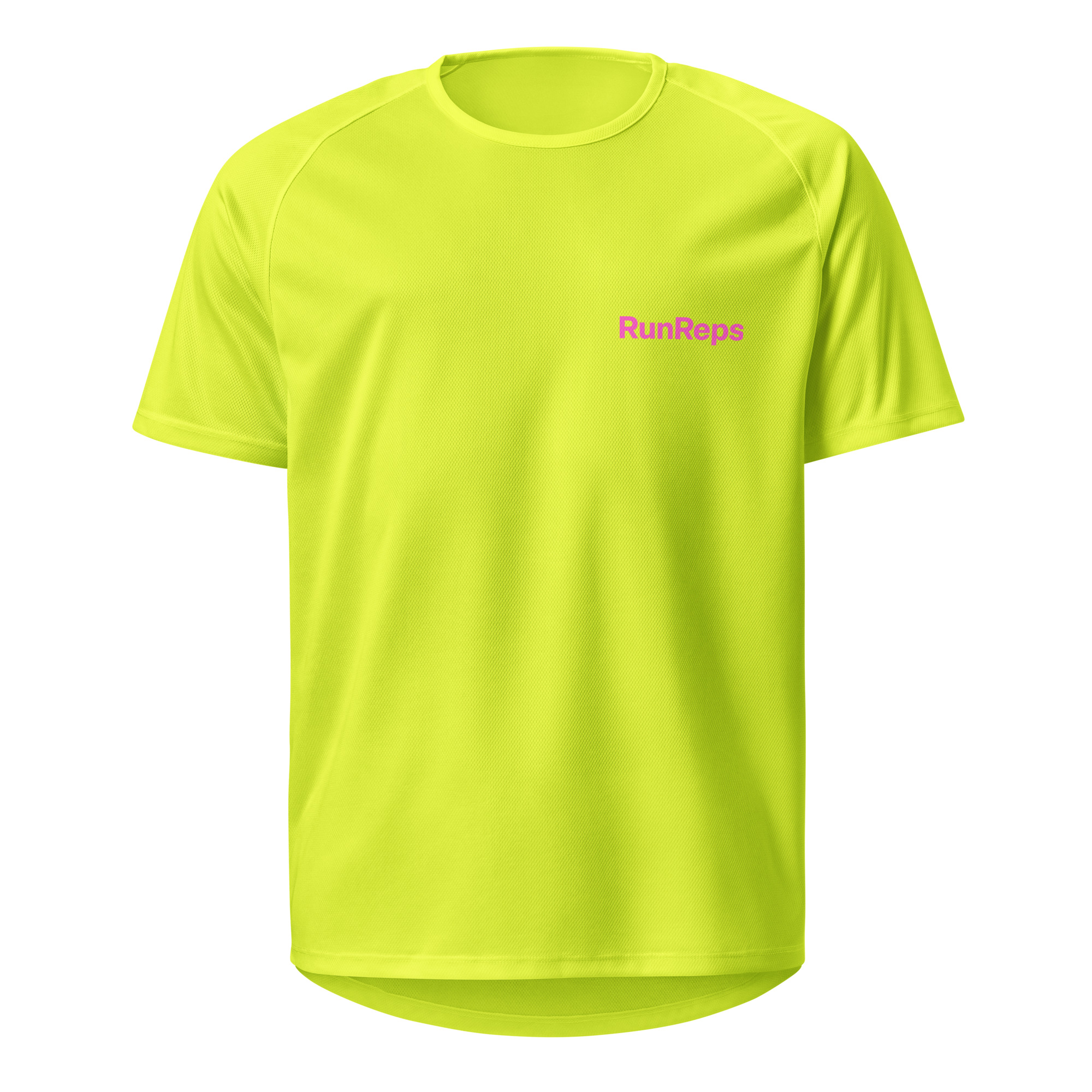
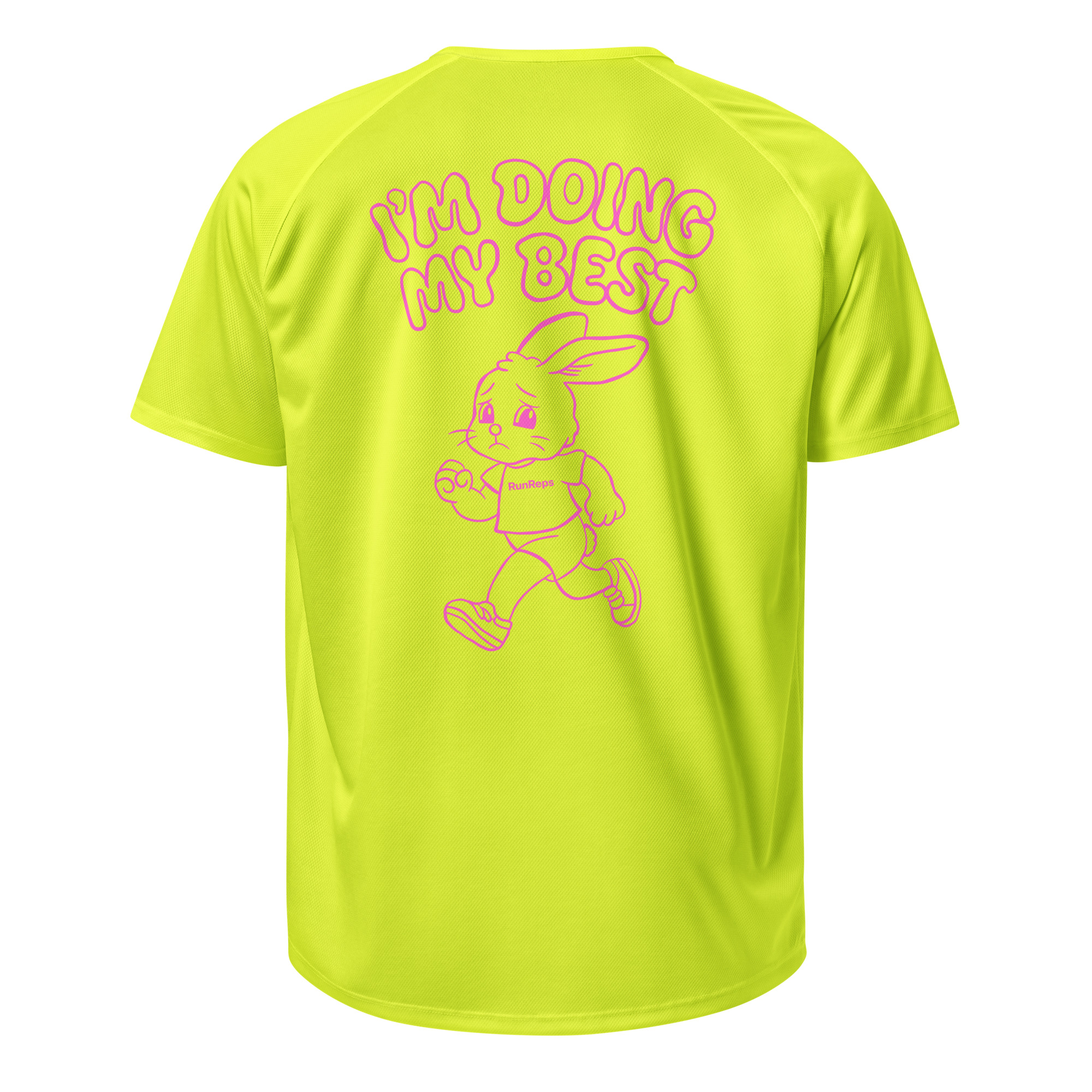
I'm Doing My Best Running Jersey
Lightweight, breathable unisex sports jersey in neon yellow. Designed for runners who keep showing up.
Free worldwide shipping on select orders
RunReps works with retail partners through the Awin affiliate network and earns a commission on qualifying purchases at no extra cost to you.