Running Altitude Adjustment Calculator
Calculate how altitude affects your running pace. Enter your pace and altitude to see the sea-level equivalent and the expected performance penalty.
Gear for altitude and trail running
Training or racing at altitude demands equipment that matches the terrain. A GPS watch with altitude tracking and quality trail shoes make a significant difference.
Garmin Fenix 7
Built-in topographic maps, altitude acclimatisation advisor, and multi-GNSS tracking. The benchmark for serious trail and mountain runners.
View on AmazonSalomon Speedcross
Aggressive lug grip for technical mountain terrain. The preferred trail shoe for steep, loose, and muddy conditions.
View on AmazonHydration Vest
Lightweight trail vest with water bladder and pockets for nutrition. Essential for longer mountain runs.
View on Amazon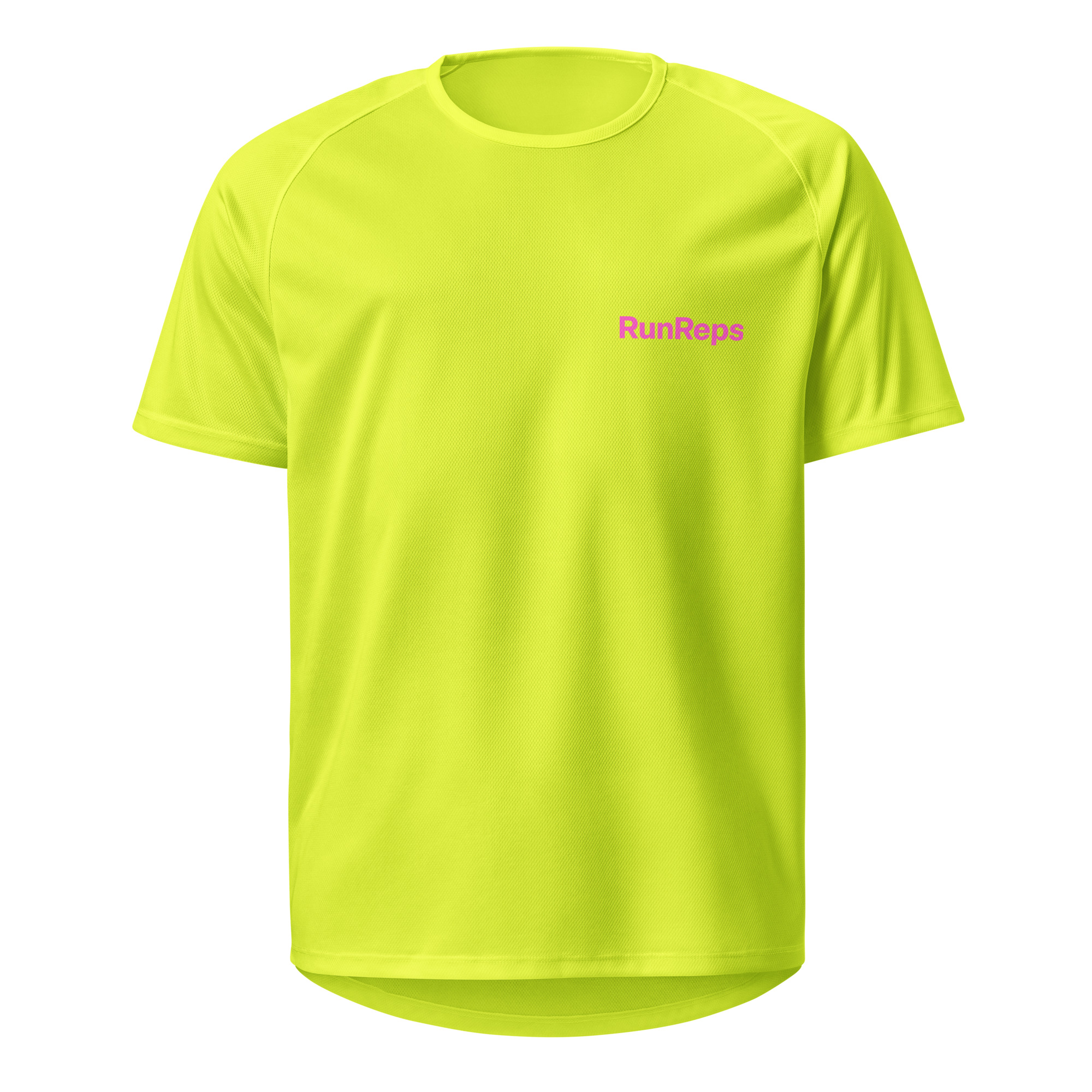
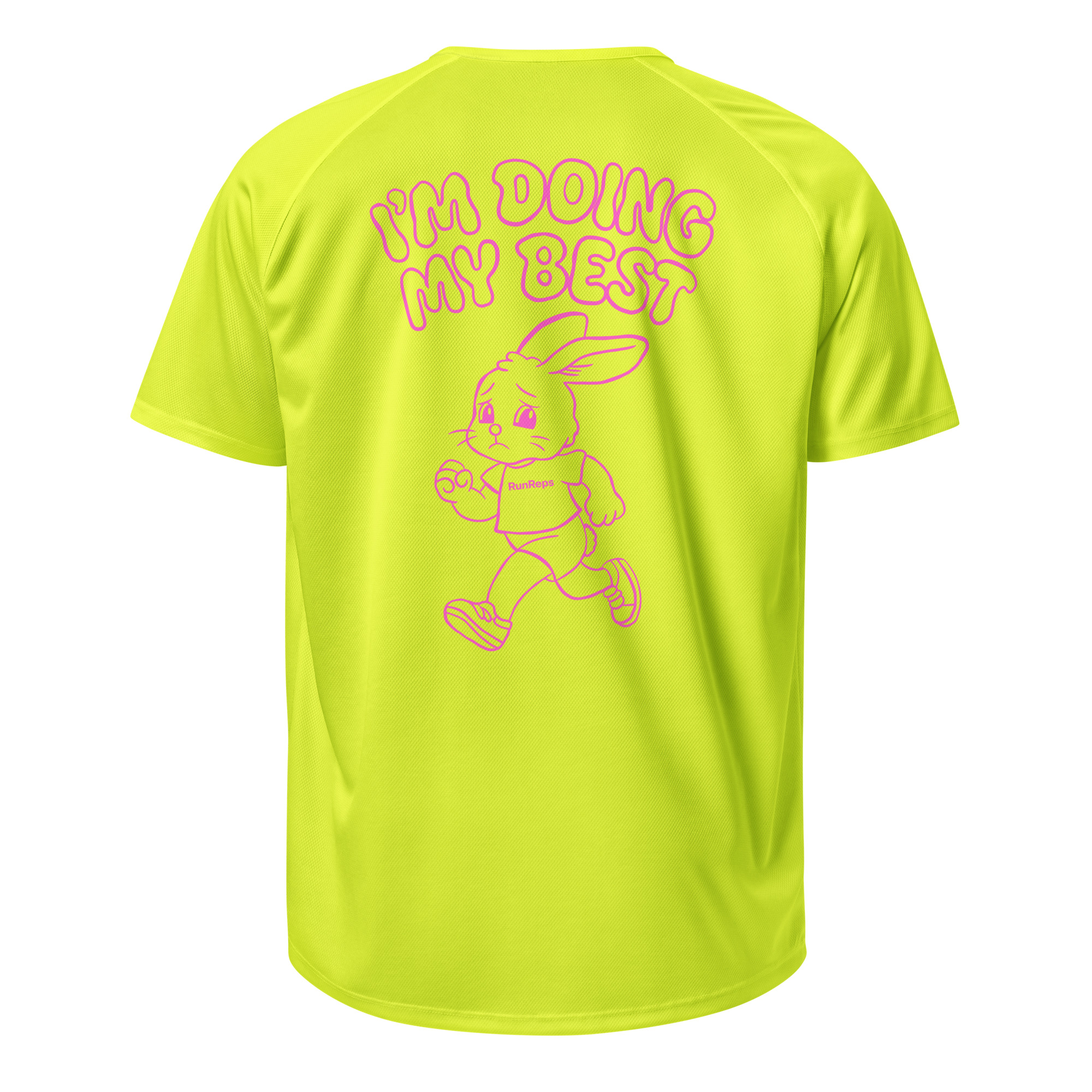
I'm Doing My Best Running Jersey
Lightweight, breathable unisex sports jersey in neon yellow. Designed for runners who keep showing up.
Free worldwide shipping on select orders
RunReps works with retail partners through the Awin affiliate network and earns a commission on qualifying purchases at no extra cost to you.
How the Running Altitude Adjustment Calculator works
Altitude reduces oxygen availability, so the same effort buys you a slower pace. Above 1,000 m, expect roughly 3% performance loss for every 1,000 m gained if you arrive unacclimatised. The calculator applies that penalty to give your sea-level equivalent pace and the slower pace to expect at altitude. It is a mid-distance figure: a 5k loses a little less, a marathon rather more.
What the altitude adjustment calculator does
Thinner air holds less oxygen, so at altitude the same effort buys you a slower pace. Nothing about your fitness has changed; the air has. The calculator turns that into a number, in either direction: what your sea-level pace becomes at altitude, and what a pace you have just run at altitude would have been worth at sea level.
The model is deliberately simple. Below 1,000 m it applies no penalty at all, because the effect on a distance runner is not meaningful until then. Above that, it applies roughly 3% performance loss for every 1,000 m gained, for a runner who has not acclimatised.
That 3% sits inside Jack Daniels' own guidance of 4 to 5 seconds per mile per 1,000 ft above 3,000 ft, and between the two hard anchors from the 1968 Mexico City Olympics at 2,240 m: the 5,000 m was run about 2% slower than Tokyo four years earlier, while the marathon was about 6% slower. It is a mid-distance figure by design. Short races lose less than it says and the marathon loses more.
Enter altitude in metres or feet and pace in min/km or min/mile; the tool converts before it calculates.
How much altitude actually costs you
The table runs the calculator's own model across places runners actually race, using a 5:00/km sea-level pace. The penalty column is what the model applies at that elevation.
Denver, the altitude most runners meet first, costs about 5 seconds per kilometre. That is real but survivable, and it is the reason a visiting runner feels wrong without being able to say why. Mexico City nearly doubles it. By La Paz you are giving up 24 seconds per kilometre, which is a different race rather than a slightly slower one.
Over a marathon the effect compounds into something worth planning around. A 3:30 marathoner arriving unacclimatised in Mexico City is looking at roughly 3:37 on the same effort, and the model would call that a good day rather than a bad one.
| Location | Altitude | Penalty | Pace at altitude |
|---|---|---|---|
| Denver | 1,609 m | 1.8% | 5:05/km (+5s) |
| Mexico City | 2,240 m | 3.7% | 5:11/km (+11s) |
| Bogotá | 2,640 m | 4.9% | 5:15/km (+15s) |
| Quito | 2,850 m | 5.5% | 5:17/km (+17s) |
| La Paz | 3,650 m | 8.0% | 5:24/km (+24s) |
| Pikes Peak | 4,302 m | 9.9% | 5:30/km (+30s) |
Altitude conversion: what your run was really worth
The more useful direction is often backwards. You have just run a hard session or a race at altitude, the watch says a number you do not like, and you want to know what it would have been at sea level. That is an altitude conversion, and the calculator does it by dividing rather than multiplying: sea-level pace = altitude pace ÷ (1 + penalty).
Run 5:00/km in Mexico City and the sea-level equivalent is about 4:49/km. In Bogotá it is 4:46, and in La Paz 4:38. If you have moved to altitude and your paces have collapsed, this is the calculation that tells you whether you have actually lost fitness or simply moved house.
Use it the other way round when you are travelling to race. Convert your sea-level goal pace up to the altitude you are racing at, then run that number on the day rather than the one you trained at. Arriving with a sea-level target and defending it for 10 km is the standard way to ruin an altitude race.
One caveat the arithmetic cannot carry: this converts *pace*, not *effort at a distance*. A 5 km loses less than the model says and a marathon more, so treat a converted marathon time as the optimistic end of the range.
| Ran 5:00/km at | Altitude | Sea-level equivalent |
|---|---|---|
| Denver | 1,609 m | 4:55/km |
| Mexico City | 2,240 m | 4:49/km |
| Bogotá | 2,640 m | 4:46/km |
| Quito | 2,850 m | 4:44/km |
| La Paz | 3,650 m | 4:38/km |
Why this assumes you have not acclimatised
The penalty above is for a runner who has just arrived. That matters, because acclimatisation genuinely changes the number and the calculator does not model it.
The broad picture: the first few days are the worst, and much of the early adaptation, plasma volume shifting back toward normal, comes inside the first one to two weeks. The slower part, building red blood cell mass, runs over several weeks and is still improving at a month. Most coaching guidance treats two to three weeks as the point where a runner stops being a visitor, and full adaptation as a matter of months rather than weeks.
There is a well-known awkward window in the middle. Arriving three or four days before a race is often worse than arriving the day before, because the initial disruption has set in but none of the adaptation has arrived. If the choice is between a short trip and a long one, either get there very late or very early.
Practically, treat the calculator's number as the ceiling on your penalty on day one, and expect the real cost to shrink over the following fortnight without ever quite reaching zero. If you are acclimatised and racing at altitude, the honest answer is that you need your own data rather than a model.
Using it alongside the rest of your race-day maths
Altitude rarely turns up alone. Mountain races combine it with gradient, and summer altitude racing combines it with heat, and each of those has its own penalty that this calculator does not include.
For gradient, the hill grade adjusted pace calculator handles the climbing cost separately. For heat and humidity, the heat adjusted pace calculator does the same job for conditions. Apply them in sequence rather than expecting one number to cover everything, and be aware that stacking two independent estimates widens the error bar on both.
To turn an adjusted pace into a finish time, or a goal time back into the pace it demands, use the pace calculator. To sanity-check whether an altitude goal is realistic against your recent form, the race time predictor works from a result you have actually run.
For the physiology rather than the arithmetic, including why altitude hits endurance harder than it hits sprinting, read how altitude affects running.
Frequently asked questions
At what altitude does running become significantly harder?
Performance effects become noticeable above 1,000 m (3,280 ft). At 2,000 m, expect roughly a 3% slowdown. At 3,000 m, around 6%. High-altitude venues like Mexico City (~2,240 m) or Flagstaff (~2,100 m) have a clear impact on race times: at the 1968 Mexico City Olympics the men's marathon was won more than eight minutes slower than four years earlier in Tokyo.
How long does altitude acclimatisation take?
Initial acclimatisation takes 2–3 weeks. Full adaptation for sea-level trained athletes takes 4–6 weeks. The 'arrive and race' strategy works for efforts under 2 hours - for longer efforts, arrive early or wait for full acclimatisation.
Does altitude training improve performance at sea level?
Yes. Training at altitude increases red blood cell count and improves oxygen-carrying capacity. The classic approach is live high, train low - live above 2,400 m, train at lower altitudes where oxygen supports high-quality workouts.