For decades, the sub-two hour marathon was the sport’s flat earth – a number so far beyond what humans had run that even the fastest racers in the world spoke about it as theory rather than target. On 27 April 2026, in cool London conditions and on a flat course shut to traffic, Sabastian Sawe stopped the clock at 1:59:30 – the first sub-two hour marathon ever run in a competitive race. By the time the line had cleared, two other men had also crossed it under Kelvin Kiptum’s previous world record of 2:00:35. The barrier did not just fall. It got obliterated.

Sawe’s record is the headline. The longer story is how marathon times got from 2:08 to under two hours, what happened to running shoes between roughly 2017 and now, and what any of it means for the rest of us, who will never run a 4:33 min/km marathon and never need to. This guide walks through the record, the trajectory, the technology, and the practical takeaways for a runner who simply wants to estimate, predict and chase their own honest finish time.
What actually happened at London 2026
Sawe, a 31-year-old Kenyan and the defending London champion, went through halfway in 60:29 – already on world record pace. Then he did something that even most professional marathon runners cannot do: he ran the second half faster than the first. His closing 21.1 km took 59:01, a split that only 63 men in history have ever run for a stand-alone half marathon. Yomif Kejelcha, making his marathon debut, finished second in 1:59:41 and became only the second man ever to break two hours in a competitive race. Jacob Kiplimo, the half marathon world record holder, was third in 2:00:28 – also faster than the previous world record. Three men under or at Kiptum’s old mark in a single race.
Tigst Assefa, the Ethiopian who already held the women-only world record, finished her own race in 2:15:41, taking another nine seconds off her record and becoming the first woman to win consecutive London titles since 2018. The men’s record will draw the headlines. The women’s mark, in many ways, is the more remarkable performance – a competitive, unpaced women-only race run nearly nine minutes inside what was the world record only seven years ago.
Conditions in London were as close to ideal as the marathon gets – cool, dry, and still. The course is fast and flat. The pacing was professional. None of that explains a 65-second improvement over the world record. For that, you have to look at the trajectory of marathon times across the last decade and the technology on the runners’ feet.
How marathon times got so fast

For most of the 20th century, the men’s marathon record fell in seconds, not minutes. Derek Clayton ran 2:08:33 in 1969. By 1988 the record had crept down to 2:06:50. Twenty years later Haile Gebrselassie was the first under 2:04 (2:03:59 in Berlin, 2008). The progression was slow because the technology – the human body, the training, the road, the shoe – was already mature. Runners got fitter at the margins. Times improved at the margins.
Then something broke. Between 2017 and 2024, the men’s record fell from 2:02:57 (Dennis Kimetto, 2014) to 2:00:35 (Kiptum, 2023) – more time taken off the record in seven years than in the previous twenty. The women’s record fell even faster: from 2:15:25 (Paula Radcliffe, 2003, a record many in the sport thought might stand for a generation) to 2:09:56 (Ruth Chepngetich, 2024, a number that would have won the 1980 Boston men’s race). And now: 1:59:30. Sub-two in a real race.
Improvements at this scale are not training improvements. Training methodology – high mileage, structured intensity distribution, altitude camps, periodisation – has been refined steadily for decades, but it was already very good in 2014. What changed was the shoe.
The super-shoe revolution
The story starts in 2016, with the development of the Nike Vaporfly 4%. Nike’s claim – that the shoe improved running economy by roughly 4% – sounded like marketing. It was not. Independent peer-reviewed research, published in Sports Medicine in 2018, confirmed the shoe reduced the energy cost of running by between 2.7% and 4.2% compared to a standard racing flat. In a sport where the difference between a personal best and a personal worst is often less than 1%, those gains were enormous.
The Vaporfly combined three things: a thick stack of supercritical Pebax foam (a polymer that returns more elastic energy per step than the EVA used in older shoes), a full-length curved carbon-fibre plate (which adds bending stiffness and a “rocker” that helps the foot roll forward), and a low-profile racing upper. The plate did not act as a spring on its own. The geometry, foam, and plate together changed how the foot interacted with the ground, reduced the energy lost in muscle and tendon, and made running fast slightly cheaper – one or two seconds per kilometre cheaper – than it had been in any racing shoe before.
Within three years, every major brand had a super-shoe. Adidas launched the Adizero Adios Pro line. Asics released the Metaspeed series. Saucony, New Balance, Hoka, Puma and On all followed. The records started to fall.
The Adizero Adios Pro Evo 3 and what Sawe wore

Sawe was racing in the Adidas Adizero Adios Pro Evo 3 – the third generation of Adidas’s elite ultralight racing super-shoe and a model only announced by the brand a few days before the London Marathon. The Pro Evo line sits above the broader Adios Pro range: built ultralight, sold in limited numbers, and engineered around a single goal – one fast race. It is the closest thing the road shoe industry has to a Formula 1 car, where everything not strictly necessary for going forwards has been stripped away.
The numbers are striking. The Pro Evo 3 is the lightest racing shoe Adidas has ever made, weighing in at an average of just over 97 g and dropping 30% of the mass of the Pro Evo 2 in a single generation. Adidas claims a 1.6% gain in running economy over the previous model, on top of a stack height of 39 mm – just inside World Athletics’ 40 mm limit for road racing. The brand says the shoe is the result of three years of research. “Our goal was two digits on the scale, with better performance than we’ve ever had,” said Stephan Scholten, Adidas’s VP of product, when the shoe was announced.
The biggest design change is what is no longer in the shoe. The previous generation used the Energy Rods – five carbon-infused rods running through the forefoot in place of a single full-length plate. The Pro Evo 3 replaces those with a new system Adidas calls ENERGYGRIM, which integrates the carbon into the geometry of the shoe rather than as a separate insert, and reimagines how stiffness and propulsion work in a super-shoe. Around that sits a new Lightstrike Pro Evo foam – the brand’s lightest and most responsive supercritical foam to date and almost 50% lighter than the foam used in earlier Pro Evo shoes – a kitesurfing-sail-inspired upper for weight-free support, and Continental rubber on the forefoot for traction at speed.
The Pro Evo 3 belongs to the same category as the Nike Alphafly, the Asics Metaspeed Sky, the Saucony Endorphin Elite and several others. Adidas’s answer to that field is to chase weight down hard while pushing energy return up – a different philosophy to Nike’s stack-and-air approach, but aimed at the same target: as much energy return as the rules allow, in as little material as possible, with geometry that does the work of the runner’s calves and ankles for them.
This is not the only reason Sawe ran 1:59:30. He is the world’s best marathon runner on current form, training at altitude in Kenya, with a half marathon personal best of 58:05. But the shoes are why his ceiling sits where it does. A Sawe-equivalent runner in 2014 racing flats would have run roughly 2:01:30 to 2:02:30 – still extraordinary, but not history.
Worth noting: Sawe was drug tested 25 times before his last attempt in Berlin, where he faded in the heat to 2:02:16. The integrity story matters. Records that survive scrutiny are the only records worth caring about, and the testing volume around the modern marathon elite is the highest the sport has ever seen.
What this means for the rest of us
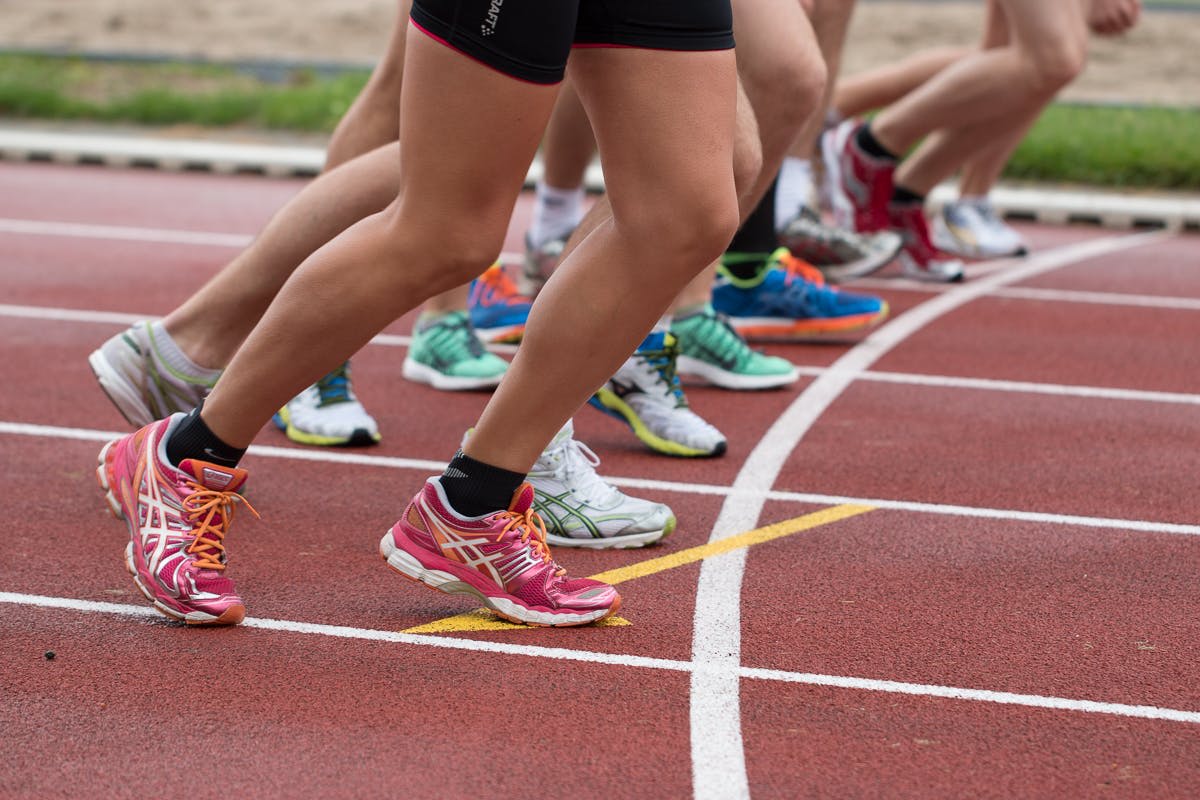
For the average runner – the 4:00 hour marathoner, the 1:55 half marathoner, the 25-minute parkrunner – the sub-two hour marathon does not change much in practical terms. The training principles still apply. Easy runs are still meant to be easy. Long runs still build durability. Threshold work still raises your sustainable pace. The race is still won between weeks 6 and 12 of a build, not in the last 200 m of the day. None of that has changed.
What has changed is the gear and the maths. A modern carbon-plated marathon shoe will give most runners a measurable boost – typically 1 to 3% on the day, with smaller gains for slower runners and larger gains for faster ones. That is somewhere between 90 seconds and four minutes off a marathon time you would otherwise have run. It is also worth knowing that the relevant rules cap stack height for road racing at 40 mm, so any race-legal shoe sits within that limit.
Two practical takeaways:
If you are racing a marathon, train in your race-day shoes before race day. Super-shoes feel different at the heel, the calves and the hamstrings – they tend to load the posterior chain harder than older racing flats. Several marathon-day calf strains over the last few years have come from runners who pulled a brand-new pair of high-stack shoes out of the box on the start line. Two or three medium-long sessions in your race shoes is the minimum.
Update your time predictions. A recent honest effort in modern shoes is a different data point to a recent honest effort in 2018 trainers. If you have switched shoes since your last benchmark, run a fresh prediction. The race time predictor will translate any recent run into target times across distances, and a pace calculator will turn the goal time into the splits you actually need to run.
The trajectory and what comes next
Sawe’s record will not stand forever. The men’s marathon trajectory in the super-shoe era has averaged something like a 30-second improvement every two years. The bottleneck, increasingly, is the human – course conditions, pacing, and the brutal physiology of running 4:32 min/km for two hours. The next wave of improvements will come from better foams, smarter plate geometries, marginal gains in cooling and hydration, and a deeper pool of athletes who grow up training in the modern shoe.
The women’s record has further to run. Assefa’s 2:15:41 is roughly two and a half minutes outside what current shoe technology and current training depth would suggest is possible in ideal conditions. A women-only sub-2:13 is realistic within three to five years. A sub-1:55 men’s marathon is harder to call, but the rate of improvement and the depth of the field point to it falling sooner rather than later.
For mortal runners, the broader lesson is that the gap between your current time and your achievable time has probably closed in the last few years. If your last marathon was three or four years ago, your honest time today – in modern shoes, with structured training – is probably 1 to 3% faster than your old personal best. That is the right backdrop for setting goals. Use a recent run, plug it into a predictor, and build the training to match.
Three runners, three honest takeaways from a record day
The aspiring sub-3 runner. Mia, 36, ran 3:08 last autumn and is targeting sub-3 at Berlin. Sawe’s record changes nothing in her training plan. It changes one thing in her race plan: she is now considering a small negative split – first half a few seconds slow, second half a few seconds quick – which the data shows is how almost every record-class marathon is run. She will use the negative split calculator to set her targets. Read more on why negative splits underpin most sub-3 marathons.
The first-time marathoner. Tom, 47, is doing his first marathon in October. Sawe’s record is inspiring, irrelevant to his finish time, and useful in one specific way – it has made him think harder about pacing. His current plan, built with the running plan generator, has an even-split race target. He has now committed to running the first 5 km a controlled 10 to 15 seconds per kilometre slower than his goal pace. That single discipline tends to be the difference between finishing strong and finishing ruined.
The veteran chasing a PB. Helen, 54, ran 3:42 in 2019. She has not raced a marathon since. Her honest target now, in modern shoes and with twelve weeks of structured training, is closer to 3:35. She predicted that target from a recent half marathon plugged into the race time predictor, and is treating it as a plan, not a guess. Her course of choice is a fast, flat one, and she is checking the forecast on RainOrRun in the days before race day so she can make a sensible call on goal pace if conditions turn.
Common questions about the sub-two marathon
Was Eliud Kipchoge’s 1:59:40 in 2019 a world record?
No. Kipchoge’s INEOS 1:59 Challenge in Vienna was the first time a human covered the marathon distance in under two hours, but it was not record-eligible. The event used rotating pacemakers, a laser pacing line, controlled drinks delivery, and a closed course – none of which is permitted under World Athletics record rules. Sawe’s 1:59:30 in London is the first sub-two hour marathon under standard race conditions and the first to count as a world record.
What time did Sabastian Sawe run at London 2026?
1:59:30. He went through halfway in 60:29 and ran the second half in 59:01, finishing more than a minute clear of Kelvin Kiptum’s previous world record of 2:00:35 set at Chicago in 2023. Yomif Kejelcha and Jacob Kiplimo also crossed the line under Kiptum’s old record on the same day, in 1:59:41 and 2:00:28 respectively.
What shoes did Sabastian Sawe wear?
The Adidas Adizero Adios Pro Evo 3 – the third generation of Adidas’s elite ultralight racing super-shoe, announced only a few days before London 2026. It is the lightest racing shoe Adidas has ever made, weighing an average of just over 97 g, with a 39 mm stack of Lightstrike Pro Evo supercritical foam, a new ENERGYGRIM carbon system replacing the Energy Rods used in earlier models, and a kitesurfing-sail-inspired upper. Adidas claims it is 30% lighter than the Pro Evo 2 and offers 1.6% better running economy.
Do super-shoes really make you faster?
Yes – by a measurable amount. Independent peer-reviewed research has shown carbon-plated, high-stack racing shoes reduce the energy cost of running by between 2.7% and 4.2% compared to traditional racing flats. In practical terms, that is typically 1 to 3% off race times for recreational runners, depending on pace, mechanics and how well the runner has adapted to the shoe. The gains are real. They are also smaller for slower runners than for elite runners, because the rebound effect is partly speed-dependent.
Should I race my marathon in super-shoes?
For most runners targeting a personal best, yes – but not in a brand-new pair. Super-shoes load the calves, Achilles and hamstrings differently to older racing shoes, and runners who race in shoes they have never trained in regularly pick up calf strains in the closing miles. Run two or three medium-long sessions or a tune-up race in the shoes before race day. Then race them.
How can I tell what marathon time my current fitness can run?
The most accurate quick answer comes from a recent honest effort – a parkrun, a 10K race, or a hard tempo run – plugged into a calculator that uses the Riegel formula. The race time predictor takes a known time and distance and estimates your time across other distances. The deeper version of this question is covered in our guide on how to predict your marathon finish time without guessing. Use the predictor as a starting point, not a guarantee, and re-predict every three to four weeks during a build.
This article is for informational purposes only and does not constitute medical advice. If you have any pre-existing health conditions or are returning to running after injury, consult a qualified medical professional before stepping into a new pair of carbon-plated racing shoes or starting a new training plan.
Race day essentials
Having the right kit on race day removes one more variable. These items help you execute your race plan with confidence.
Garmin Forerunner 265
Live pace alerts and lap tracking keep you honest on race day. The AMOLED display is easy to read mid-race.
View on AmazonSiS Go Energy Gels
Isotonic gels that go down easily during a race. No need to find a water station to wash them down.
View on AmazonRunning Belt
Carry gels, phone, and keys without bouncing. A simple belt keeps everything secure so you can focus on your pace.
View on AmazonASICS Gel-Nimbus
High cushion and a smooth ride for neutral runners covering longer distances. A consistent favourite for comfort.
View on Amazon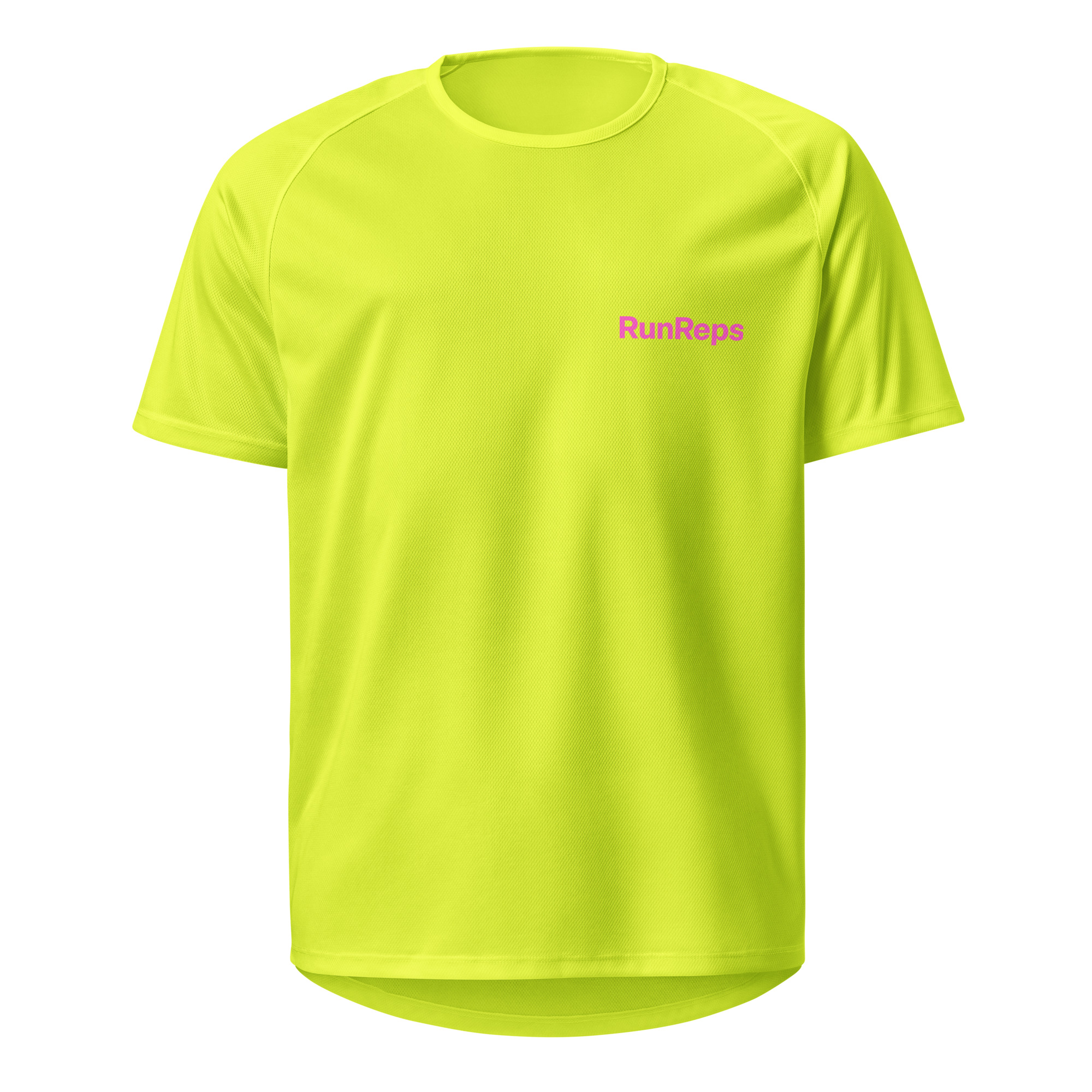
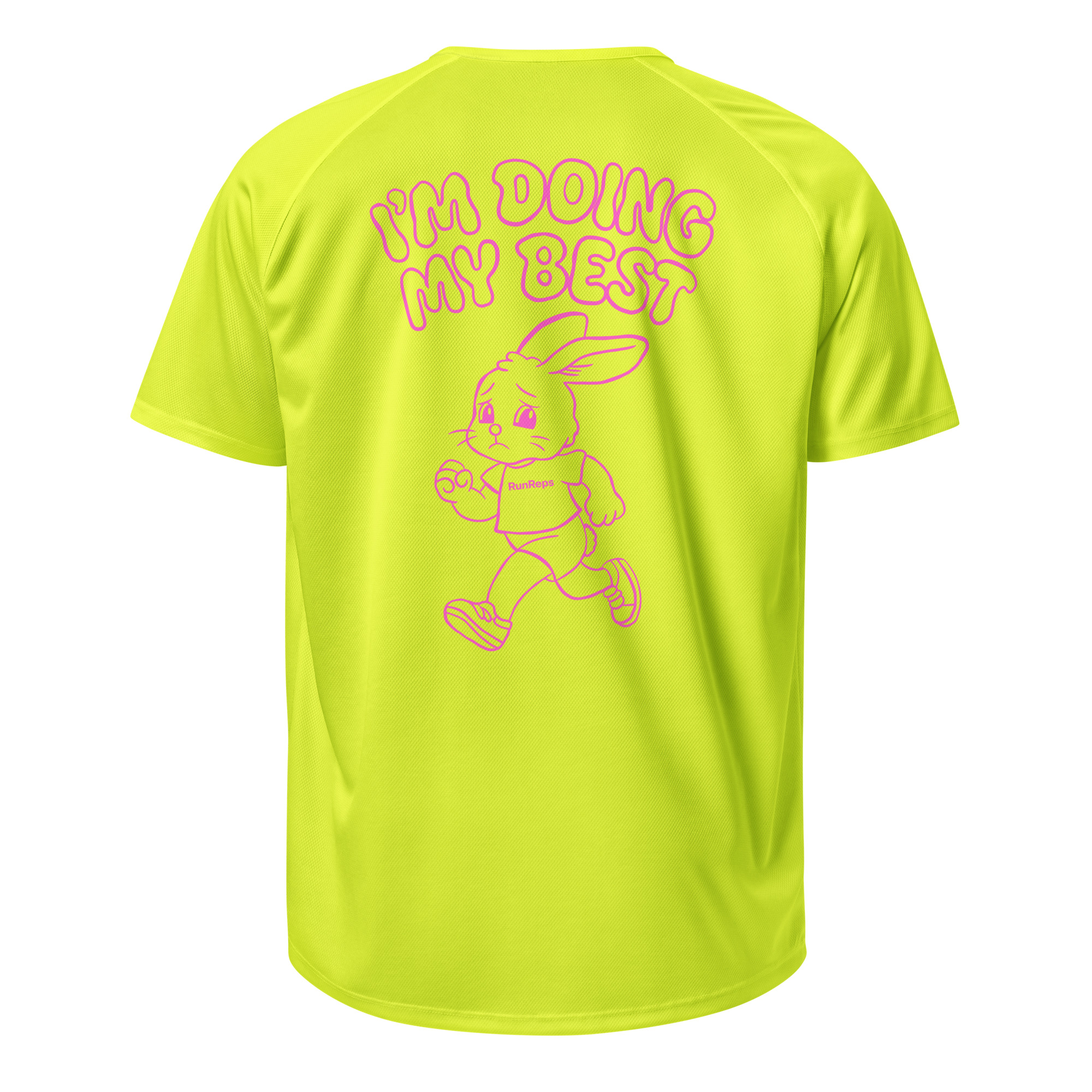
I'm Doing My Best Running Jersey
Lightweight, breathable unisex sports jersey in neon yellow. Designed for runners who keep showing up.
Free worldwide shipping on select orders
RunReps works with retail partners through the Awin affiliate network and earns a commission on qualifying purchases at no extra cost to you.