Most runners own a watch that records every step, a phone that tracks every kilometre, and a head full of numbers they do not quite know what to do with. A 5K time. A goal half marathon time. A heart rate average. A treadmill incline. The data is everywhere – the translation between data and decision is where most plans quietly fall apart. That is what running calculators are for. Each one takes a piece of information you already have and turns it into a number you can train with, race with, or trust on race day.

This guide is the full RunReps tool kit in one place. Twelve calculators, what each one does, when to use it, and how they fit together across a training cycle. Treat it as a map. Bookmark the ones you will use this week, and come back when the season changes.
Why a connected tool kit beats a single calculator
Any one calculator answers a single question. A pace calculator tells you what your splits should be at a goal time. A race time predictor tells you what time that fitness can produce. A heart rate zone tool tells you whether the easy pace you have chosen is actually easy. The trouble is that none of those answers stand alone – your race target depends on your current fitness, your current fitness depends on your training, your training depends on your easy pace being honestly easy. Pull on one thread and three others move with it.
That is why a tool kit is more useful than any single calculator. Used together, the tools give you a feedback loop: predict, train, measure, adjust, predict again. Used in isolation, they produce confident-looking numbers that do not survive the first hard session. Every tool below has its place. The skill is knowing which one to reach for.
The pacing tools: rough estimate to race-day splits

Pacing is the entry-level skill of every distance runner, and four of the calculators below sit on top of each other to support it.
Pace Calculator. The starting point. Enter a target time and a distance and it returns the pace per kilometre or per mile you need to hold. Equally, enter a recent run and it tells you the pace you actually ran. Use it for setting goal paces, working out training pace bands, and translating between min/km and min/mile when you race in a country that uses the other unit. If unit switching is the whole job, the pace converter does it in a single step, with min/km, min/mile, km/h and mph on one screen.
Race Time Predictor. Enter a recent honest effort – a parkrun, a 10K race, a hard solo run – and the predictor uses the Riegel formula to estimate your time across other distances. The most useful tool when you are deciding whether a goal is realistic for your current fitness or sits a training cycle away.
Split Time Calculator. Once you have a goal time, this tool turns it into a list of cumulative splits to follow on the day. Particularly useful for races where you can write splits on your wrist or hand and check them against the kilometre markers. The discipline of even splits is what wins most age-group races and most personal bests – and a printable list is what makes the discipline stick.
Negative Split Calculator. If you want to run the second half slightly faster than the first – the strategy that produces most marathon personal bests – this calculator builds the split list for you. Set a target time and a negative split percentage and it returns the first-half and second-half target paces. Almost every sub-3 marathon and most fast halfs are run this way.
The training and planning tools
Pacing answers what to run on race day. Training answers what to run between now and then.
Running Plan Generator. The most-used tool on the site. Enter your current fitness, your goal race, your weekly availability and any constraints, and it produces a structured plan with easy runs, threshold work, intervals, and a long run. Better than any generic plan because it is built around your starting point, not a fictional average runner. Use it for race builds, base-building blocks, and post-race comebacks.
Interval Generator. Drops a structured interval session into your week. Choose a target distance, a target pace and a recovery, and the tool builds the session – for example 8 x 400 m at 1500 m pace with 90 seconds jogging recovery. Useful when your plan calls for “speed work” without specifying the exact session.
Pace to Heart Rate Zone Calculator. Translates between your training paces and the heart rate zones they should land in. The most common training mistake is running easy days in Zone 3 instead of Zone 1 or 2. This tool gives you a zone-by-zone breakdown so you can spot the drift in your data and pull the easy pace back where it belongs.
Training Plans hub. Not a calculator, but the home for the structured plans the team has built – including the Couch to 5K plan. Use this when you want a known, well-tested template rather than a fully personalised plan.
Workouts library. A growing collection of single workout templates – tempo runs, threshold ladders, fartlek sessions, hill repeats – that slot into any plan. Useful when you have a free day and want a structured session ready to run.
The adjustment tools: course, conditions, body

The fastest way to fail a goal is to forget that race day is rarely flat, cool and dry. The next four tools handle the variables.
Hill Grade Adjusted Pace Calculator. Translates pace at a given gradient back to flat-equivalent effort. A 5:00 min/km on a 5% climb is the same effort as roughly 4:25 min/km on the flat. Use it when training on hills to make sure your effort matches your plan, and when racing on rolling courses to set realistic split targets.
Treadmill Incline Pace Calculator. Translates between treadmill belt speed, incline and outdoor pace. Particularly useful in winter or in hot summers where indoor running is the smarter choice. The standard “1% incline mimics outdoor” guidance is roughly correct – this tool makes it precise.
Weight vs Pace Calculator. Estimates the pace impact of carrying or losing body weight. Useful for context, not motivation – the relationship between weight and pace is real but smaller than runners often assume, and chasing a number on the scale is the wrong way into faster running. Read the output as a thought experiment, not a target.
Age Grading Calculator. Compares your time to the world record for your age and sex, expressed as a percentage. A 70% age grade is competitive at club level. 80% is national class. The calculator is the fairest way to compare a 28-year-old’s 3:10 marathon to a 58-year-old’s 3:35 – in age-graded terms, the older runner is the stronger performer.
How the tools combine across a training cycle
The tools are designed to be used in sequence, not in isolation. Here is how a typical 10-week build for a goal race actually uses them.
Week 1. Run an honest effort – a parkrun, a 5K time trial, or a recent race. Plug the result into the race time predictor to get an estimated time at your goal distance. If the predicted time and your dream time are close, the goal is realistic. If they are far apart, set an interim target and revisit at week 6.
Weeks 1 to 2. Use the plan generator to build the training block. Cross-check the easy paces against the heart rate zone tool so your easy days actually sit in Zone 1 or 2.
Weeks 3 to 6. Run the plan. Use the interval generator to fill in any flexible session days. If you train somewhere hilly, use the hill grade tool to make sure climbing efforts match the prescribed effort, not the prescribed pace.
Week 6. Run a halfway test – a tune-up race or a hard session at the target effort. Re-predict your race time. Adjust the goal time up or down based on the new prediction.
Weeks 7 to 9. Sharpen with race-pace work. Use the split time calculator to build a pacing band. If the race is hilly, build a hill-adjusted version. If you are aiming to run a strong negative split, use the negative split calculator to set the first and second half targets.
Race week. Check the forecast on RainOrRun. Adjust the goal pace by 1 to 3% if the day is hot or humid – and adjust effort, not the watch number, if the day is windy. Print the splits, pin them to your wrist, and run the plan.
Post-race. Use the age grading calculator to put the result in context across age groups. Use the race time predictor to estimate your fitness at the next distance you fancy. Begin the next cycle.
Three runners, three different tool kits

The complete beginner. Priti, 36, is doing Couch to 5K. Her tool kit is small and deliberate: the Couch to 5K plan, the pace calculator to translate her finishing pace into the kilometre or mile pace she sees on her phone, and – once she finishes the programme – the race time predictor for her first 10K target.
The marathon runner. Tom, 47, has run two marathons and wants a 3:30. His kit is broader: the plan generator builds the block, the heart rate zone tool keeps his easy days honest, the negative split calculator builds the race pacing plan, and the hill grade tool adjusts his Sunday long run on rolling terrain. Race week he uses the split time calculator to print his splits and the cross-brand weather sites to set the day’s pace target.
The age-group competitor. Helen, 58, is chasing a club V55 5K record. Her tool kit leans on the age grading calculator to track her competitive standing year on year, the interval generator for her midweek 1 km repeats, and the pace calculator to translate her training paces into the precise kilometre splits she needs.
Different runners. Different goals. Same underlying tool kit, used selectively.
Common questions about running calculators
Are running calculators accurate?
Most are accurate within 1 to 3% for trained runners on flat courses in similar conditions. Race time predictors based on the Riegel formula are particularly reliable between 1.5 km and the half marathon. Accuracy drops at the marathon distance for less-trained runners, in extreme weather, and on courses with significant elevation gain. The right way to use a calculator is as a starting point, not a guarantee – re-predict from updated training data as the build progresses.
Which running calculator should I use first?
Start with the race time predictor. Plug in a recent honest effort and let it estimate your fitness across distances. Once you have a target time, use the pace calculator to translate it into training paces, and the plan generator to build the structured weeks between now and race day. Those three answer roughly 80% of the planning questions for any runner.
Can I use these calculators if I run in miles instead of kilometres?
Yes – every calculator on the site supports both miles and kilometres, with paces shown in min/km and min/mile. The maths is identical underneath. Pick whichever matches your watch and your race signage on the day, and stay consistent within a single training block. If you need to move a number between the two, pace conversion covers min/km, min/mile, km/h and mph in one place.
Do I need a heart rate monitor to use the heart rate zone tool?
Not strictly. The pace to heart rate zone calculator can produce zone estimates from age and resting heart rate alone. A heart rate monitor sharpens the result, but the talk test – if you can speak in full sentences, you are in Zone 1 or 2 – is a free, surprisingly accurate alternative for easy days.
How often should I re-run my predictions during a training block?
Roughly every three to four weeks if you are racing or running honest hard efforts. More frequent than that and the noise overwhelms the signal – your fitness does not change meaningfully week to week. Less frequent than that and you risk discovering a fitness shift only at the start line, when adjusting the plan is too late.
This article is for informational purposes only and does not constitute medical advice. If you have any pre-existing health conditions or are returning to running after injury, consult a qualified medical professional before starting a new plan.
Gear to support your training
Good training gear helps you track progress and stay consistent. These are our top picks for runners in structured training.
Garmin Forerunner 265
Track every session with live pace data, training load metrics, and recovery advice. The best mid-range GPS watch.
View on AmazonNike Pegasus
Handles easy runs, tempo work, and long runs. A versatile daily trainer that suits most training plans.
View on AmazonFoam Roller
Speeds up recovery between training sessions. Essential when training load increases.
View on Amazon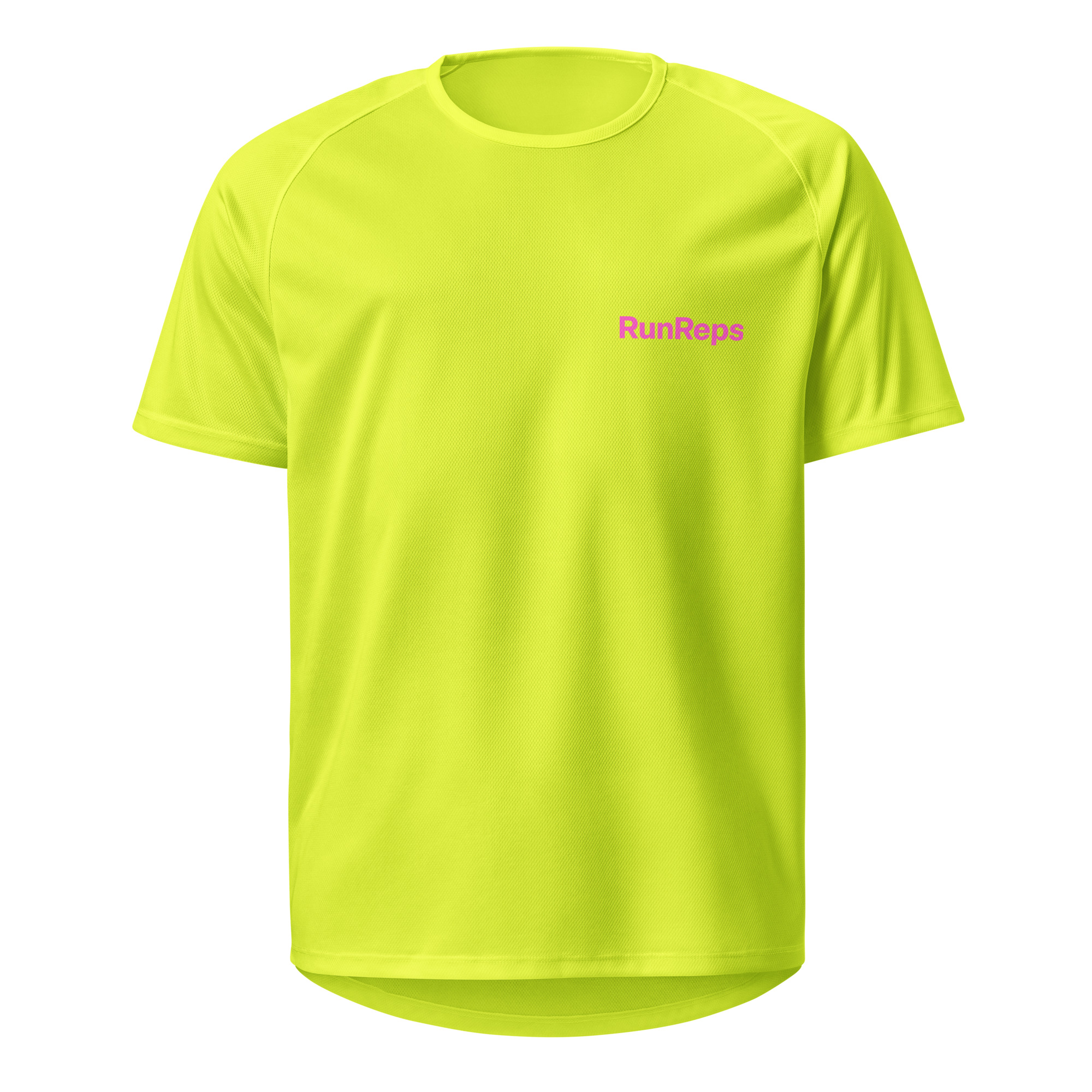

I'm Doing My Best Running Jersey
Lightweight, breathable unisex sports jersey in neon yellow. Designed for runners who keep showing up.
Free worldwide shipping on select orders
RunReps works with retail partners through the Awin affiliate network and earns a commission on qualifying purchases at no extra cost to you.