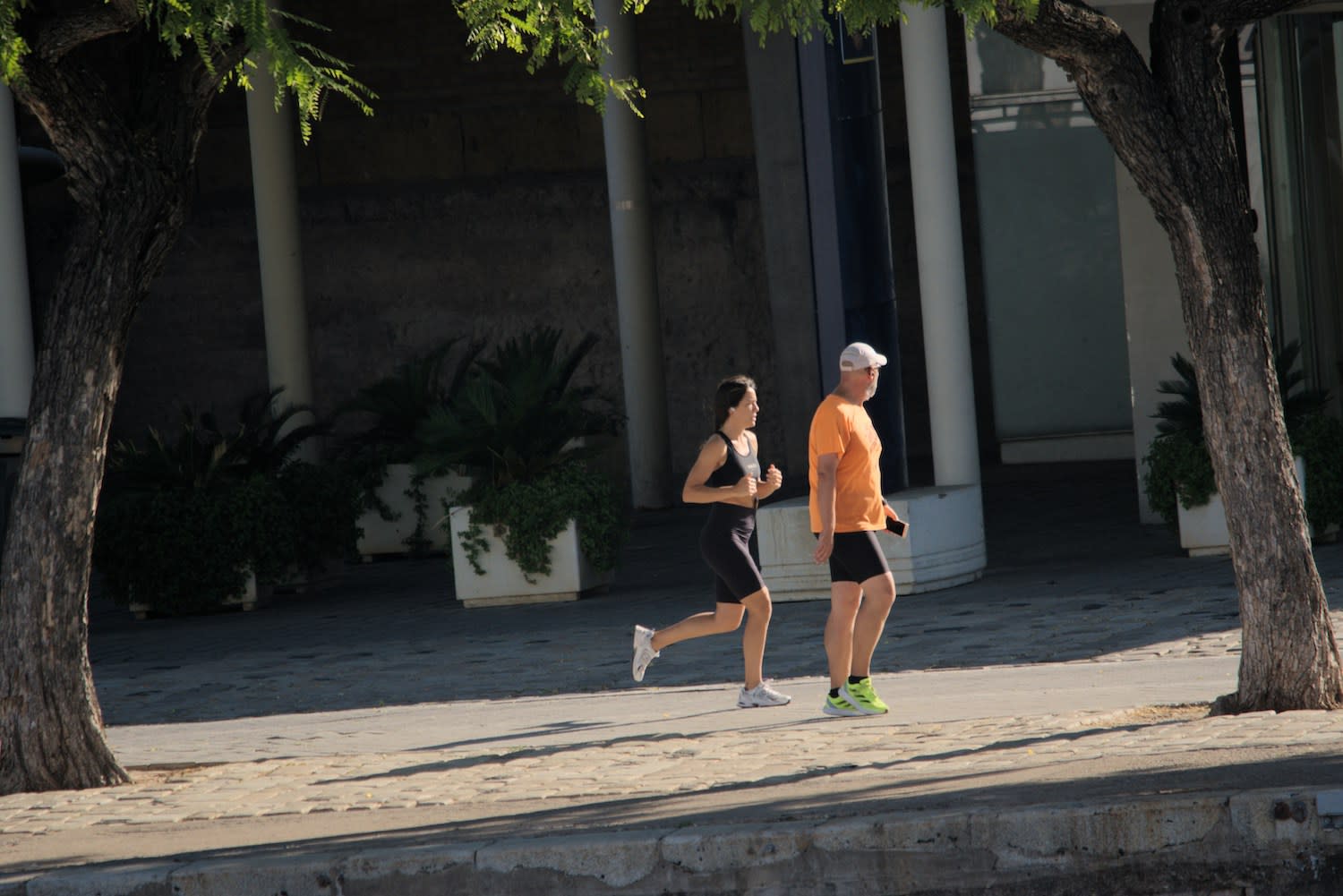
Two runners finish the same 10 km in exactly 50:00. One ran a flat canal path. The other climbed 180 m over rolling farm tracks. Their watches show an identical 5:00 min/km, yet only one of them ran hard. This is the problem grade adjusted pace solves. Raw pace tells you how fast you moved across the ground. It says nothing about the hill you were fighting to get there.

Grade adjusted pace (GAP) translates your effort on a slope into the flat-ground pace that would have cost you the same energy. Get it right and your easy days stay genuinely easy, your hill sessions stop lying to you, and your race pacing survives first contact with a climb. On a flat course the other half of race pacing is how you split the effort, and how to calculate a negative split shows how to run the second half faster than the first. Here is how GAP works, how to calculate it, and how to put it to use.
What grade adjusted pace actually measures
Every metre you climb costs extra energy, and every metre you drop gives a little back (though never as much as the climb took). Grade adjusted pace models that trade. It looks at your real pace and the gradient underneath you, then reports the equivalent flat pace for the same effort. Run 6:00 min/km up a stiff 6% climb and your GAP might read closer to 5:00 min/km, because that is how hard your body was actually working.
The science behind it comes from Alberto Minetti and colleagues, whose 2002 study in the Journal of Applied Physiology measured the energy cost of running across a wide range of uphill and downhill gradients. Their curve is the backbone of most modern GAP models, including the grade adjusted pace that Strava popularised. The key finding is that the cost of climbing rises steeply, while the saving from descending is modest and eventually reverses once a downhill gets steep enough to force you to brake.
So GAP is not a way to make your hilly runs look faster for the ego. It is a way to compare effort honestly across any terrain, the same way judging hills by effort rather than pace keeps you from blowing up halfway up a climb.
How to calculate grade adjusted pace
You can approximate GAP by hand, and it helps to understand the mechanism before you trust a tool to do it for you. Work through it in three steps.
- Find the gradient of the segment. Divide the elevation change by the horizontal distance, then multiply by 100. Climb 30 m over 1 km (1000 m) and your gradient is 3%. A drop of 30 m over the same distance is -3%.
- Apply an effort adjustment for the slope. As a working rule of thumb drawn from the Minetti energy-cost curve, each 1% of uphill gradient adds roughly 3 to 4 seconds per kilometre of effort, while each 1% of gentle downhill returns only about 1.5 to 2 seconds per kilometre. The relationship is not linear at the extremes, which is exactly why a calculator earns its place on steep terrain.
- Adjust your real pace by that amount. Ran a 3% climb at 5:30 min/km? Subtract roughly 10 seconds to get a GAP near 5:20 min/km. Ran a 3% descent at 5:30? Add back only about 5 seconds, landing near 5:35, because gravity did less for you than the climb took away.
The hand method is fine for a single steady hill. It falls apart on a rolling route where the gradient changes every few seconds, since the true GAP is the sum of hundreds of tiny adjustments across the whole profile. That is the job a grade adjusted pace calculator is built for: feed it your pace and gradient and it applies the full effort curve, not a single average. If you train indoors, the same logic drives our treadmill incline effort tool, which converts a belt gradient into the equivalent outdoor effort.
What a grade adjusted pace calculator shows on real runs
Picture a Tuesday tempo run you know well: 6 km at a target of 4:45 min/km on flat ground. Today you run it on a lumpy loop with 90 m of climbing. Your average pace comes out at 4:58 min/km and you finish convinced you had an off day. Drop the run into a GAP calculation and the picture flips. The climbs pushed your grade adjusted pace to 4:44 min/km. You did not have a bad day. You hit your tempo effort exactly, the hills just hid it behind a slower number on the watch.
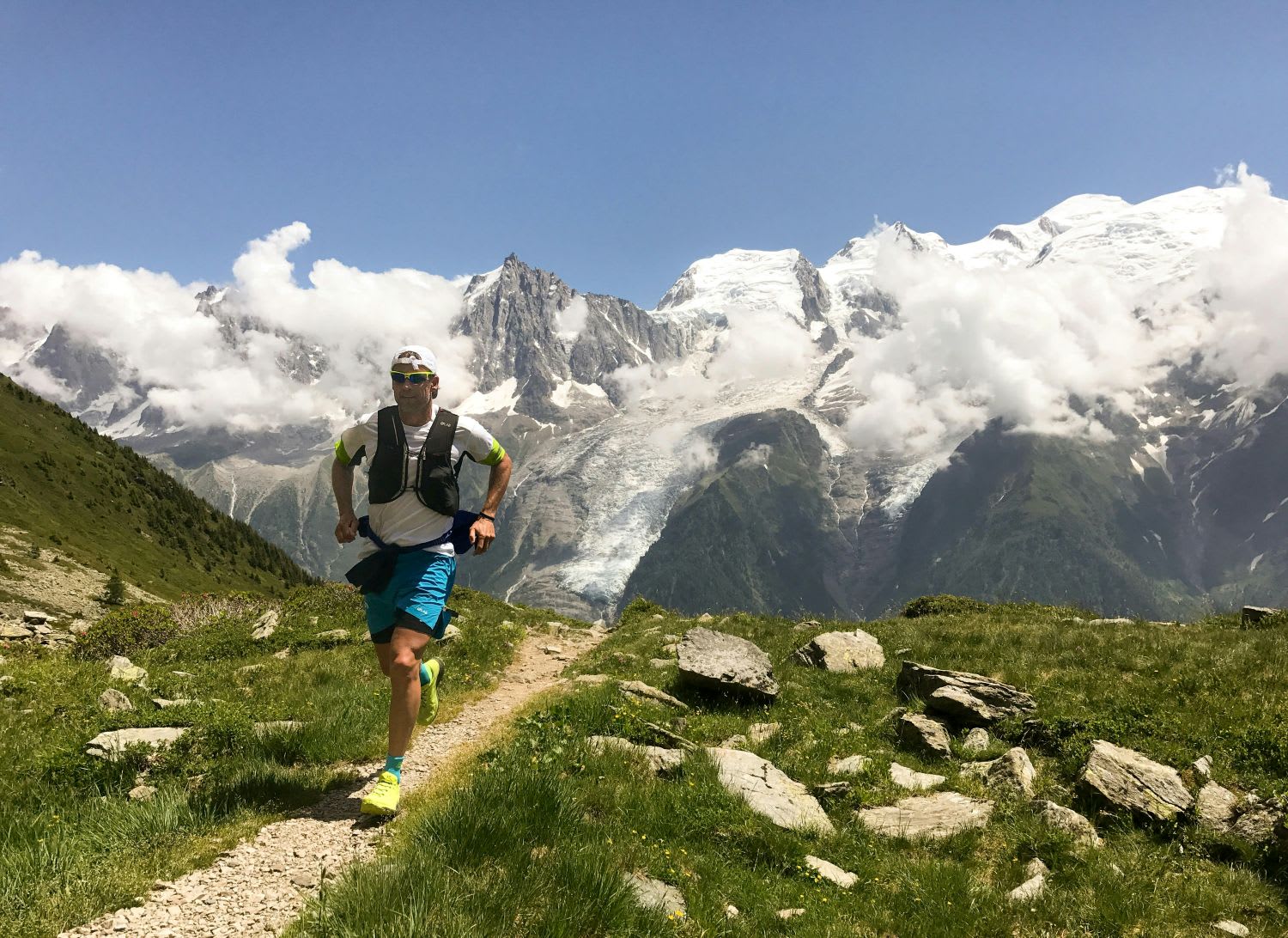
The reverse trap is just as common. A fast-looking downhill split can flatter you into thinking you are ready to race harder, when GAP shows the descent, not your fitness, bought most of those seconds. This matters most when you plan a race. If you use a flat time to feed a race time predictor, a hilly course will punish an over-ambitious target. The same care applies to pacing a trail marathon, where the elevation profile decides your day more than any single split.
Coach’s note: Treat GAP as your effort compass, not a scoreboard. On easy days, if your grade adjusted pace creeps faster than your flat easy pace, you are running your recovery too hard. Let the number pull you back, not push you on.
Grade adjusted pace questions runners ask
Is grade adjusted pace the same as normalised or graded pace?
They point at the same idea from slightly different angles. Grade adjusted pace and graded pace both convert slope effort into a flat-equivalent pace. Some platforms label it graded adjusted pace or graded pace, but the underlying model, adjusting your pace for the energy cost of the gradient, is the same one Minetti’s research describes. The tools go by several names too – a grade adjusted pace calculator, a GAP calculator, or a gap pace calculator – but they all run that same model. Whatever the label, the goal is an honest effort number rather than a raw one.
How accurate is a grade adjusted pace calculator?
Accurate enough to guide training, as long as the elevation data is clean. GAP is only as good as the gradient it reads, and GPS elevation can be noisy on tree-covered or built-up routes. Barometric-altimeter watches and corrected elevation data give the tightest results. Use GAP for comparing effort and pacing decisions, not as a certified performance record down to the second.
Should I use grade adjusted pace on downhills too?
Yes, but expect a smaller adjustment than you would guess. Gentle descents return only a little pace, and steep descents cost you again as braking loads your quads. That is why GAP does not simply mirror the uphill penalty. On a steep drop your grade adjusted pace can actually be slower than your raw pace, which is the model telling you the descent was work, not a free ride.
Does grade adjusted pace replace heart rate for easy runs?
It complements it. GAP checks whether your mechanical effort matched your intended pace, while heart rate checks the physiological cost. On a hot or tired day the two can disagree, and that gap is useful information. Lean on both rather than trusting either one alone.
Grade adjusted pace is a training guide, not medical advice. Build hill volume and intensity gradually, and consult a qualified professional before starting a new programme if you are managing an injury or health condition.
Gear to support your training
Good training gear helps you track progress and stay consistent. These are our top picks for runners in structured training.
Garmin Forerunner 265
Track every session with live pace data, training load metrics, and recovery advice. The best mid-range GPS watch.
View on AmazonNike Pegasus
Handles easy runs, tempo work, and long runs. A versatile daily trainer that suits most training plans.
View on AmazonFoam Roller
Speeds up recovery between training sessions. Essential when training load increases.
View on AmazonSiS Go Energy Gels
Isotonic gels that go down easily during a race. No need to find a water station to wash them down.
View on Amazon

I'm Doing My Best Running Jersey
Lightweight, breathable unisex sports jersey in neon yellow. Designed for runners who keep showing up.
Free worldwide shipping on select orders
RunReps works with retail partners through the Awin affiliate network and earns a commission on qualifying purchases at no extra cost to you.