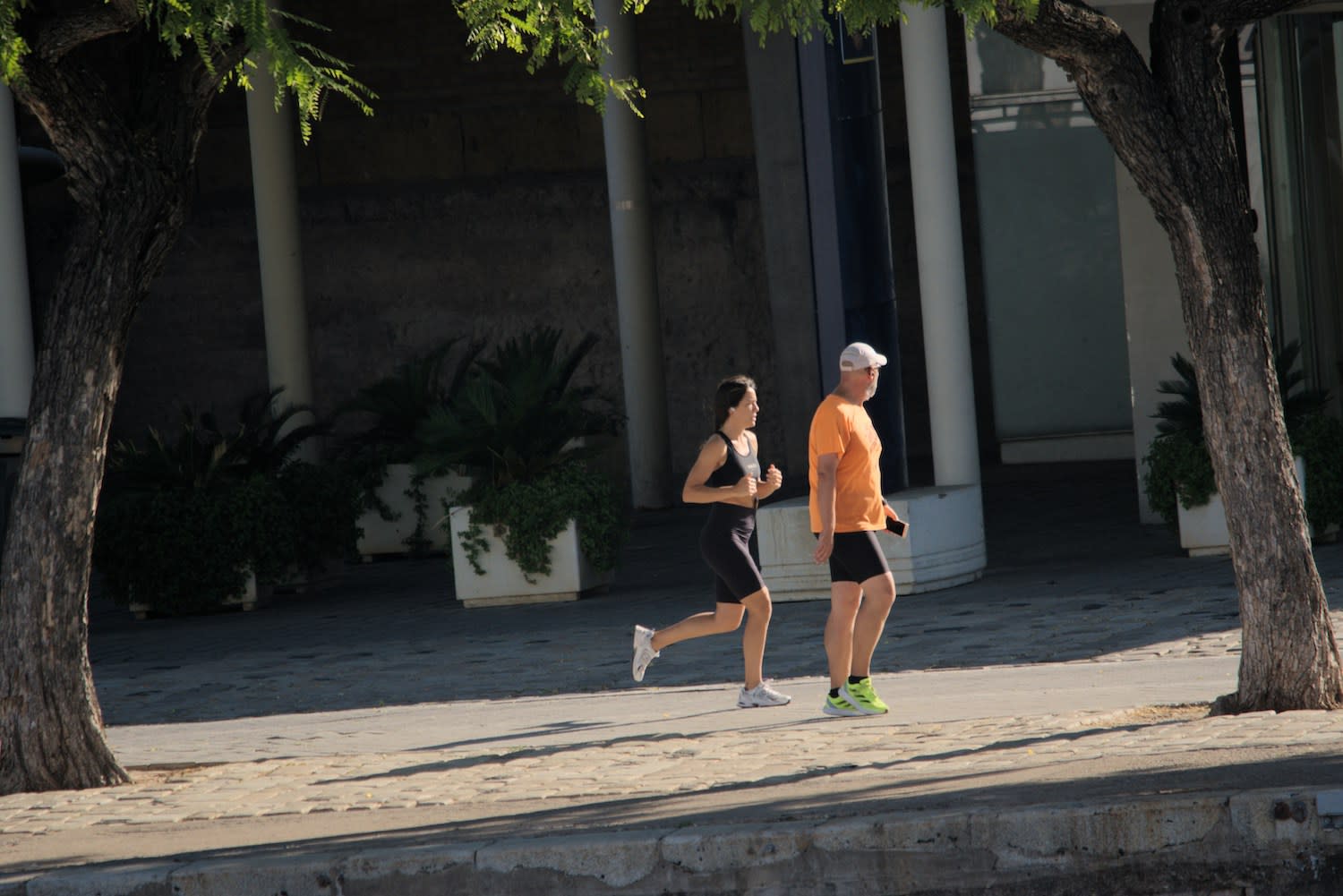
You are running a steady 5:15 min/km on a flat stretch. You feel good. Then the road tilts upward – maybe 4%, maybe 6% – and within 200 metres your watch reads 5:50 min/km. Nothing changed inside your body. You did not slow down in any way that matters. The hill did that to your numbers.

Most runners glance at that slower split and feel like they are losing fitness. They push harder, blow up, and write off the session. But the split was never the problem. The problem is treating pace as effort when the ground is not flat. The fix has a name, grade adjusted pace, and it converts a climb into the flat-ground effort it really cost. On hills, effort is the metric that counts – and once you understand hill running properly, your hill sessions become some of the most productive training you do.
What Actually Happens to Your Body on a Hill
When you run uphill, gravity adds resistance. Your muscles have to produce more force per stride to lift your bodyweight against the gradient. Research from the Journal of Sports Sciences shows that oxygen consumption increases by roughly 3-5% for every 1% increase in gradient (Minetti et al., 2002). A 5% hill demands 15-25% more oxygen than flat ground at the same pace.
Your cardiovascular system responds exactly as it would to running faster on flat ground. Heart rate rises. Breathing deepens. Lactate accumulates sooner. The effort is real – your watch just cannot see it. On flat races the same effort-first mindset is what lets you finish faster than you started, and how to calculate a negative split turns it into per-kilometre targets.
This is why a runner holding 5:50 min/km on a 5% gradient is working at least as hard as they would at 5:15 min/km on flat ground. Often harder. The RunReps Hill Grade Adjusted Pace Calculator shows exactly how much a given gradient shifts your equivalent flat pace. Plug in your hill split and the gradient, and you will see what your effort actually translates to on level ground.
Coach’s insight: If a runner tells me they ran 6:00 min/km on a hilly route and asks why they are “so slow”, my first question is always: what was the gradient? A 6:00 min/km on a 6% climb is equivalent to something closer to 5:10 min/km on the flat. That is not slow. That is strong.
Why Chasing Pace Uphill Breaks Your Training

The instinct to maintain your flat-ground pace on a hill is one of the most common training mistakes in distance running. It feels like the right thing to do – hold the target, stay disciplined. But what you are actually doing is shifting from an aerobic effort to a threshold or even anaerobic effort without meaning to.
Dr. Tim Noakes, in Lore of Running, describes how runners who attempt to hold pace on climbs accumulate fatigue disproportionately, compromising the quality of the rest of their session (Noakes, 2003). You finish the hill on target, but the remaining kilometres are run in a fatigued state that offers diminishing returns.
The better approach is simple: run hills by effort, not pace.
- Easy runs: Your breathing should stay conversational on the climb, even if your pace drops 30-60 seconds per kilometre.
- Tempo runs: Hold the same perceived effort. Your pace will be slower uphill and faster downhill. That is correct.
- Intervals: If you are doing hill repeats, target a specific effort or heart rate zone rather than a pace. Use the Pace to Heart Rate Zone Calculator to find the right zone.
How to Use Hill-Adjusted Pace in Your Training
Hill-adjusted pace is the concept of converting your hilly-terrain pace into its flat-ground equivalent. It answers the question: if I ran this effort on flat ground, what pace would I be hitting?
Step 1: Know your gradient
Most GPS watches estimate elevation gain, but they are not always precise. If you run the same hilly route regularly, learn the gradients. Apps like Strava show gradient profiles for saved segments. For a rough guide: a hill that feels moderate is usually 3-5%. A hill that feels steep is 6-10%. Anything above 10% and most runners are power hiking, not running.
Step 2: Calculate your adjusted pace
Take your actual hill pace and the gradient, and run them through the Hill Grade Adjusted Pace Calculator. If your flat easy pace is 5:30 min/km and the calculator shows your 6:10 min/km on a 4% hill is equivalent to 5:25 min/km on flat ground, you know you were actually running slightly faster than intended. Ease off next time.
Step 3: Adjust your targets before you run
If you know a route includes a 1 km climb at 5%, work out your target hill pace before you set off. This prevents the mid-run panic of watching your pace drift and overcompensating. Planned pacing beats reactive pacing every time.
Step 4: Review your sessions with context
After a hilly run, do not just look at your average pace. Break the session into flat, uphill, and downhill segments. Judge each against the appropriate benchmark. A “slow” session with 200 metres of climbing might actually be a strong one once you adjust for gradient.
Hills as Speed Training in Disguise
Here is something most runners do not appreciate until a coach points it out: hill running builds the same qualities as speed work, with lower injury risk.
Running uphill forces a higher knee drive, greater glute activation, and more powerful push-off – the exact mechanics you need for faster flat running. Research in the International Journal of Sports Physiology and Performance found that six weeks of hill sprint training improved 5 km performance by an average of 2% in trained runners, comparable to flat interval training but with fewer reported overuse injuries (Barnes et al., 2013).
The gradient acts as natural resistance. You get the training stimulus of a faster pace without the impact forces that come with actually running faster on hard, flat surfaces. For injury-prone runners or those building back from a break, hills are one of the safest ways to develop speed.
This is exactly why your pace alone does not tell the full story. A hill session that reads “slow” on your watch might be delivering more training benefit than a flat tempo run.
Downhill Running: The Other Half of the Equation
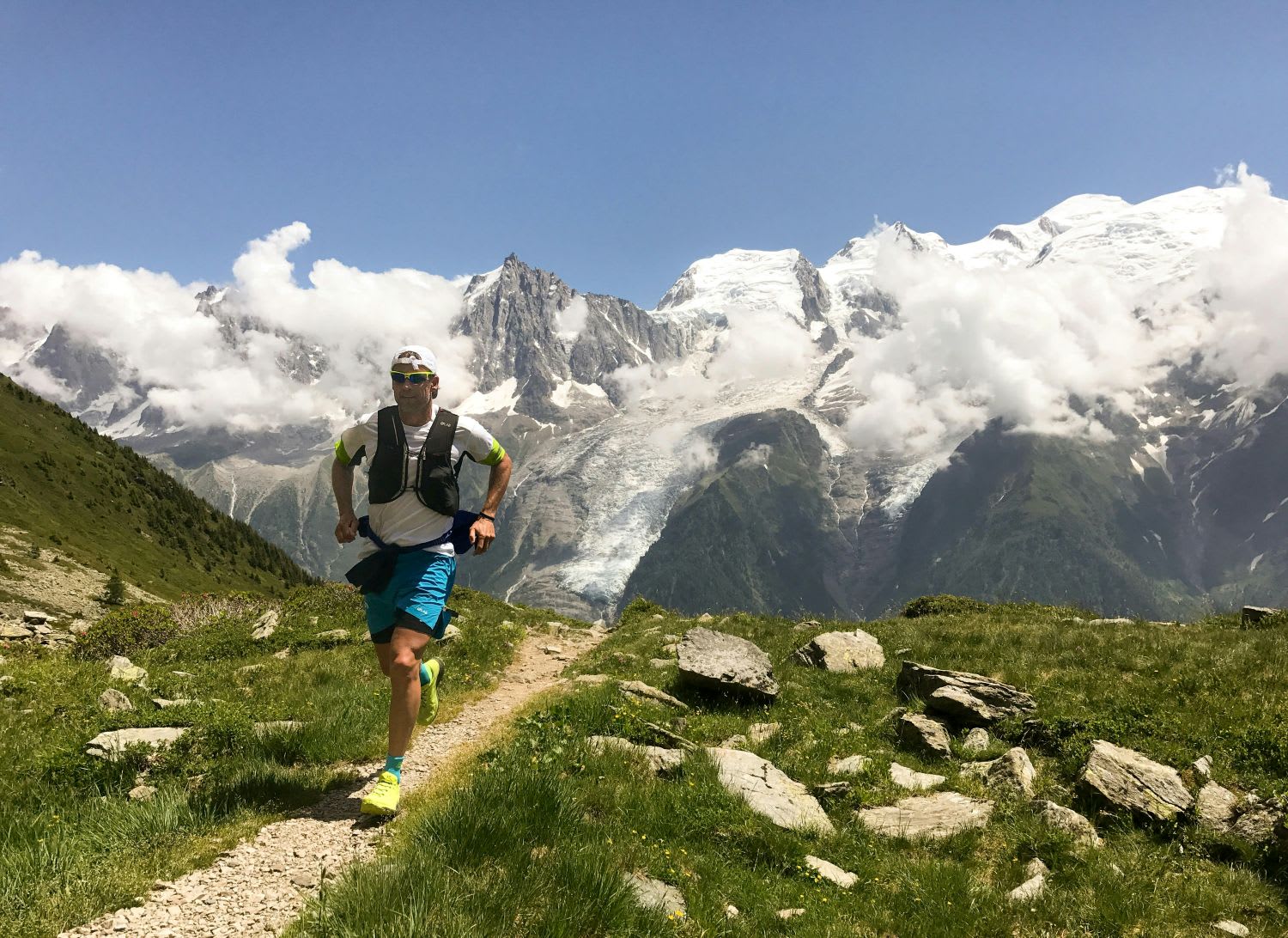
Effort-based running applies on descents too, but in reverse. Your pace speeds up on downhills, but the muscular cost is different. Downhill running loads your quadriceps eccentrically – the muscle lengthens under tension – which causes more microtrauma than concentric uphill work.
This is why runners who blast downhills often feel fine during the run but pay for it the next day. The pace looked great. The damage was hidden.
On descents, resist the temptation to chase fast splits. Control your pace, shorten your stride slightly, and let gravity assist without pounding your legs. Your Pace Calculator targets are for flat ground – adjust your expectations in both directions.
Hill Running Questions Runners Ask
How much slower should I expect to run uphill?
As a rough guide, expect to add 15-20 seconds per kilometre for every 2% increase in gradient at the same effort. A 4% hill adds roughly 30-40 seconds. A 6% hill adds 45-60 seconds. These are averages – your body weight, running economy, and hill experience all affect the numbers. Use the Hill Grade Adjusted Pace Calculator for a personalised estimate.
Should I run hills every week?
Yes, if your local terrain allows it. One dedicated hill session per week – hill repeats, a hilly long run, or a route with sustained climbs – builds strength and running economy without needing a gym. If you live somewhere flat, a treadmill set to 4-6% incline is an effective substitute.
Is it better to power up a hill or take it steady?
It depends on the session. For easy and long runs, take it steady – match your flat-ground effort, accept the slower pace. For hill repeats and speed sessions, push hard on the climb and recover on the descent. The key is knowing which type of session you are doing before you reach the hill, not deciding in the moment.
How do I compare my hilly run to a flat run?
Use the Hill Grade Adjusted Pace Calculator to convert your hill pace into a flat-ground equivalent. This gives you a fair comparison and stops you from undervaluing strong sessions on challenging terrain. Over time, tracking your adjusted pace alongside your flat pace shows fitness gains that raw splits miss entirely.
This article is for informational purposes only. Always consult a qualified coach or medical professional before making significant changes to your training programme.
Race day essentials
Having the right kit on race day removes one more variable. These items help you execute your race plan with confidence.
Garmin Forerunner 265
Live pace alerts and lap tracking keep you honest on race day. The AMOLED display is easy to read mid-race.
View on AmazonSiS Go Energy Gels
Isotonic gels that go down easily during a race. No need to find a water station to wash them down.
View on AmazonRunning Belt
Carry gels, phone, and keys without bouncing. A simple belt keeps everything secure so you can focus on your pace.
View on AmazonNike Pegasus
Handles easy runs, tempo work, and long runs. A versatile daily trainer that suits most training plans.
View on Amazon

I'm Doing My Best Running Jersey
Lightweight, breathable unisex sports jersey in neon yellow. Designed for runners who keep showing up.
Free worldwide shipping on select orders
RunReps works with retail partners through the Awin affiliate network and earns a commission on qualifying purchases at no extra cost to you.