Essential Running Accessories: An Honest Kit List
Prepare for Comfort and Performance
13 May 2026
Walk into any running shop on a Saturday morning and you will leave £400 lighter with a bag full of things you do not need yet. The industry sells gear in the order that suits its margins, not the order that suits your training. The honest truth: most runners need five items in year one, not fifteen. The rest earns its place later, when your training gets specific enough to justify the spend. This is a guide to the essential running accessories that genuinely pay off, told in the order they actually start to matter.
You will spot a pattern. The cheapest items often deliver the biggest training payoff, and the expensive ones often solve problems you do not have yet. Gear without a plan is wasted spend, so before you start shopping, get clear on what you are training for. The RunReps Running Plan Generator will tell you what your weekly sessions look like, and that tells you what kit you actually need.

The Honest Hierarchy of What You Actually Need
There is a rough order to a running kit list, and it has very little to do with what gets recommended on social media. From day one you need shoes that fit, clothes that do not chafe, and a way to track your runs. That is it. Everything else – watches, straps, gels, recovery tools, gadgets – earns its place once your training has a specific shape: a target race, a weekly long run that crosses 90 minutes, or a structured speed session that needs zones.
A useful filter: ask whether the item solves a problem you currently have, or a problem brands have invented for you. Cooling vests for a recreational 5 km runner are the second category. A foam roller for someone running four times a week is the first. Spend on the first, defer the second, and your running gear essentials list stays short and effective.
Shoes: the One Non-Negotiable Spend
If you spend money on one thing, spend it here. Shoes are the only item where price genuinely correlates with outcomes, because they are the only piece of kit that takes load from every footstrike. A study published in the British Journal of Sports Medicine linked worn or ill-fitting footwear to a measurable rise in lower-limb overuse injuries in recreational runners (van der Worp et al., 2015). Shoes are not a fashion purchase. They are an injury-prevention purchase.
What to actually look for, in plain terms:
- Fit before features. A thumb’s width of space at the front, no slipping at the heel, no pressure points across the forefoot. Try them in the afternoon when your feet are slightly swollen, as they will be after 5 km.
- Use case. Daily trainers absorb your easy mileage. A solid pair of neutral road shoes will cover most easy mileage for most runners. A second pair – lighter, more responsive – is worth it once you are running four or more days a week, because rotating shoes spreads the load and reduces the repetitive impact on any single tissue.
- Replacement window. Most road shoes last 500-800 km. Track total distance and replace when the midsole feels flat under the ball of the foot, not when the upper looks tired.
Resist the urge to buy carbon-plated racing shoes for training runs. They are designed for race pace and will not give you any training benefit on a Tuesday easy run.
Apparel That Actually Earns Its Place

You need two things from running clothes: they move sweat away from your skin, and they do not rub. That is it. Cotton t-shirts and cheap socks are the most common cause of chafing and blisters on runs longer than 8 km. Both are fixable for under £30.
The principles to follow:
- Moisture-wicking tops. Synthetic or merino. Anything that holds water against your skin will rub, chill you, or both. A couple of moisture-wicking running tops on rotation is plenty for most weeks.
- Anti-chafe shorts or tights. Look for flat seams, a built-in liner if you prefer that, and a secure pocket for a key or gel.
- Proper running socks. Synthetic blend, cushioned where you need it, snug enough not to bunch. The cheapest upgrade with the biggest payoff in your kit.
- Layering principle. Dress for 10 degrees warmer than the outside temperature. You will be uncomfortable for the first kilometre and right for the next ten. Three thin layers always beat one thick one.
Skip the bright fashion brands until you have run consistently for six months. A plain technical t-shirt from a sports shop will perform identically to one with a logo on it. If you start picking up rubs on longer efforts, a tube of anti-chafe balm on inner thighs, underarms and nipples is the cheapest fix in running.
Hydration: When You Actually Need It
For runs under 60 minutes in temperate conditions, you do not need to carry water. Most runners do not realise this and end up sloshing about with a half-empty bottle for 5 km. Hydration only becomes essential once your run length, the temperature, or both push you into a real fluid deficit.
A practical rule:
- Under 60 minutes, mild weather: nothing. Drink before, drink after.
- 60-90 minutes, or warm weather: a handheld running bottle or soft flask. Easy to grip, no bounce, simple to refill.
- Over 90 minutes: a running hydration vest or belt that carries 500 ml plus an electrolyte tab. Sodium loss matters more than fluid volume on long efforts.
Belts beat vests on shorter efforts because they sit lower and bounce less. Vests beat belts once you are carrying more than 500 ml and need somewhere to stash gels, a phone and a layer. Try before you buy. Anything that bounces will ruin a long run.
A GPS Watch: Do You Actually Need One?
This is the most common upgrade question, and the answer is: not as early as you think. A phone app records pace and distance accurately enough for the first year of training. Where a GPS watch earns its place is when you start running structured sessions – intervals, tempo blocks, hill repeats – and need to glance at your wrist mid-effort rather than fish a phone out of an armband.
The deciding factors:
- If you run by feel and use your phone post-run to log it: stay with the phone.
- If you are doing structured intervals with specific pace targets: a watch is the right next purchase.
- If your phone is dying mid-run from GPS use: a watch becomes a battery-life decision, not a luxury.
You do not need the top model. A basic running GPS watch records pace, distance, splits and elapsed time. Anything beyond that – maps, music, payments – is convenience, not training value. Save the money for shoes.
Once you have a watch, the data is only useful if your sessions are built around it. The Running Plan Generator sets your specific pace targets for easy, tempo and interval days, so the numbers on your wrist mean something.
Heart Rate Monitoring: When It Actually Matters

You do not need a heart rate monitor until you are doing zone-based training. Most beginners do not need it for the first year. Once you start doing structured aerobic work – long runs at a specific intensity, tempo runs anchored to a percentage of max – heart rate gives you a far more honest signal than pace. Pace lies on hot days, on hilly routes, after bad sleep. Heart rate does not.
The strap-versus-wrist question is settled by science. A meta-analysis in the European Journal of Applied Physiology found chest straps consistently more accurate than optical wrist sensors during high-intensity intervals, where wrist readings drift by up to 10-15 beats per minute (Pasadyn et al., 2019). For steady efforts, wrist optical is fine. For interval work, a chest heart rate strap wins.
Once you have your zones set, the pace to heart rate zone calculator will translate your race pace into the heart rate ranges that match each training session, so your zone 2 runs are genuinely zone 2.
Headphones: the Honest Case for Bone Conduction
If you run on roads, in cities, or in low light, in-ear headphones are a risk you do not need to take. Bone-conduction headphones sit on your cheekbones and leave your ear canal open. The audio quality is worse than a good pair of in-ears – that is the honest trade-off – but you can hear a car approaching, a cyclist behind you, a person calling out. For road running, that trade is worth making.
If you run exclusively on trails or treadmills, normal headphones are fine. Pick what fits, holds in sweat, and lasts long enough for your longest run. Battery life matters more than driver size for runners.
Visibility and Safety Gear for Evening Running
This sits in the “cheap but genuinely essential” category for anyone who runs in low light. A reflective band, a small clip-on light, or a reflective running vest costs under £15 and makes you visible to drivers from over 100 metres away. UK road safety data consistently shows that pedestrians wearing high-visibility clothing in low light are significantly more likely to be seen in time for a driver to react.
The practical kit list:
- Reflective elements on the front, back and sides of your clothing. Movement reflectors on ankles and wrists are particularly effective because they catch headlights from multiple angles.
- A clip-on red rear light in flashing mode. Visible from far further than reflective fabric alone.
- A running head torch on unlit paths. Cheap models from camping shops perform identically to running-branded versions at a third of the price.
This is one category where you should not overthink the brand. Visible is visible. Buy the cheapest reflective item that fits comfortably, and replace it when it stops being reflective.
Recovery Tools: the One Cheap Thing That Genuinely Works
A foam roller is the most overlooked piece of kit in any kit list and the cheapest with a real evidence base. Used for five minutes a day on calves, quads and glutes, it reduces delayed-onset muscle soreness and maintains tissue quality across a training week. Research published in the International Journal of Sports Physical Therapy shows consistent benefits for perceived recovery and short-term flexibility from regular foam rolling (Cheatham et al., 2015).
You do not need a vibrating one. You do not need a brand. A basic medium-density foam roller costs under £20 and lasts for years. Massage guns, recovery boots, ice baths and percussive devices all have niche cases, but a foam roller used four times a week beats any of them.
A Running Log: the Unsexy Item That Compounds
Of all the essential running accessories, the one that delivers the most over a year is a running log. It is not a product. It is a habit, recorded somewhere. Distance, pace, how the run felt out of ten, anything unusual. Three lines per session, kept for six months, gives you the single most valuable training tool a runner can have: a record of what works for your body.
Digital or paper – the format does not matter. If you prefer pen and paper, a simple running journal kept next to your kit will outperform any app you forget to open. What matters is that you can look back at the four weeks before your last good race and see exactly what you did. Or look back at the two weeks before your last injury and see the spike in mileage that caused it. A log makes patterns visible that memory cannot.
If you are training indoors during a stretch of bad weather, log your treadmill sessions too. The treadmill incline pace calculator will let you record an equivalent outdoor effort, so your indoor work shows up properly in your log.
What You Do Not Need Yet
A short list, told honestly. None of these are bad products. They just sit further down the priority order than the industry suggests.
- Compression socks. Mixed evidence for performance. Some benefit for travel and post-run recovery on long-haul flights. Not essential for training.
- Energy gels for runs under 75 minutes. Your body has enough stored glycogen. Save the gels for long efforts.
- Running-specific sunglasses. Any sunglasses that stay on your face will do. Look for grippy nose pads, not a brand.
- Recovery shakes. A normal meal within an hour of a hard session does the same job for less money.
- Power meters. A genuinely useful tool for elite training and triathlon. Not necessary for most recreational programmes.
Buy the basics. Train consistently. Add new gear only when your training has a clear use case for it. That is how a kit list stays short and your wallet stays intact.
If you would rather start from a structured framework than build your sessions from scratch, the RunReps training plans library covers everything from a first 5 km to a sub-3:30 marathon, with the right gear cues built into each phase.
Questions Runners Ask About Essential Kit
What is the minimum running kit list for a complete beginner?
Three items will get you started: a properly fitted pair of running shoes, a moisture-wicking top, and a decent pair of running socks. Total spend can be under £100 if you avoid brand premiums. Everything else – watch, hydration, heart rate monitor – can wait until you have built a consistent three-runs-a-week habit and have a clearer sense of what your training needs.
Do I need a GPS watch if I already have a phone?
Not for your first year. A phone app records pace and distance accurately enough for easy runs and basic progress tracking. A watch becomes worth the spend once you start structured sessions – intervals, tempo runs, hill repeats – where glancing at pace mid-effort matters, or when your phone battery cannot survive a long run on GPS.
How often should I replace my running shoes?
Most road shoes hold their cushioning for 500-800 km. The exact number depends on your weight, your gait, the surfaces you run on, and how often you wash them. Track distance from new and replace when the midsole feels flat under the ball of the foot. The uppers usually last longer than the foam underneath.
Is a chest strap heart rate monitor really better than wrist-based?
Yes, for interval and high-intensity work. Wrist optical sensors lose accuracy during rapid heart rate changes, which is exactly when you most want the data. For steady-state runs, wrist readings are fine. If you are running zone-based sessions or chasing specific intensity targets, a chest strap is the upgrade that earns its place.
What is the best accessory for evening running safety?
Reflective elements on multiple sides of your body, plus a clip-on flashing rear light. Movement reflectors at the ankles and wrists are particularly effective because they catch headlights from changing angles. None of this is expensive. Total spend for proper visibility is under £20 and the safety upside is enormous.
This article is for informational purposes only and does not constitute medical advice. If you are new to running or returning after injury, consult a qualified healthcare professional before starting a new training programme.
Starter gear for new runners
You do not need much to start running, but a few well-chosen items make the experience better and help you stick with it.
Brooks Ghost
Balanced cushioning, a comfortable fit, and a forgiving ride. One of the most recommended shoes for new runners.
View on AmazonGarmin Forerunner 255
Simple to use with accurate GPS tracking. Helps you build consistency by seeing your pace and distance improve over time.
View on AmazonFoam Roller
Reduces muscle soreness after runs and helps prevent common beginner injuries. A few minutes of rolling goes a long way.
View on AmazonSiS Go Energy Gels
Isotonic formula that does not need water. Easy on the stomach and widely used by club and elite runners in the UK.
View on Amazon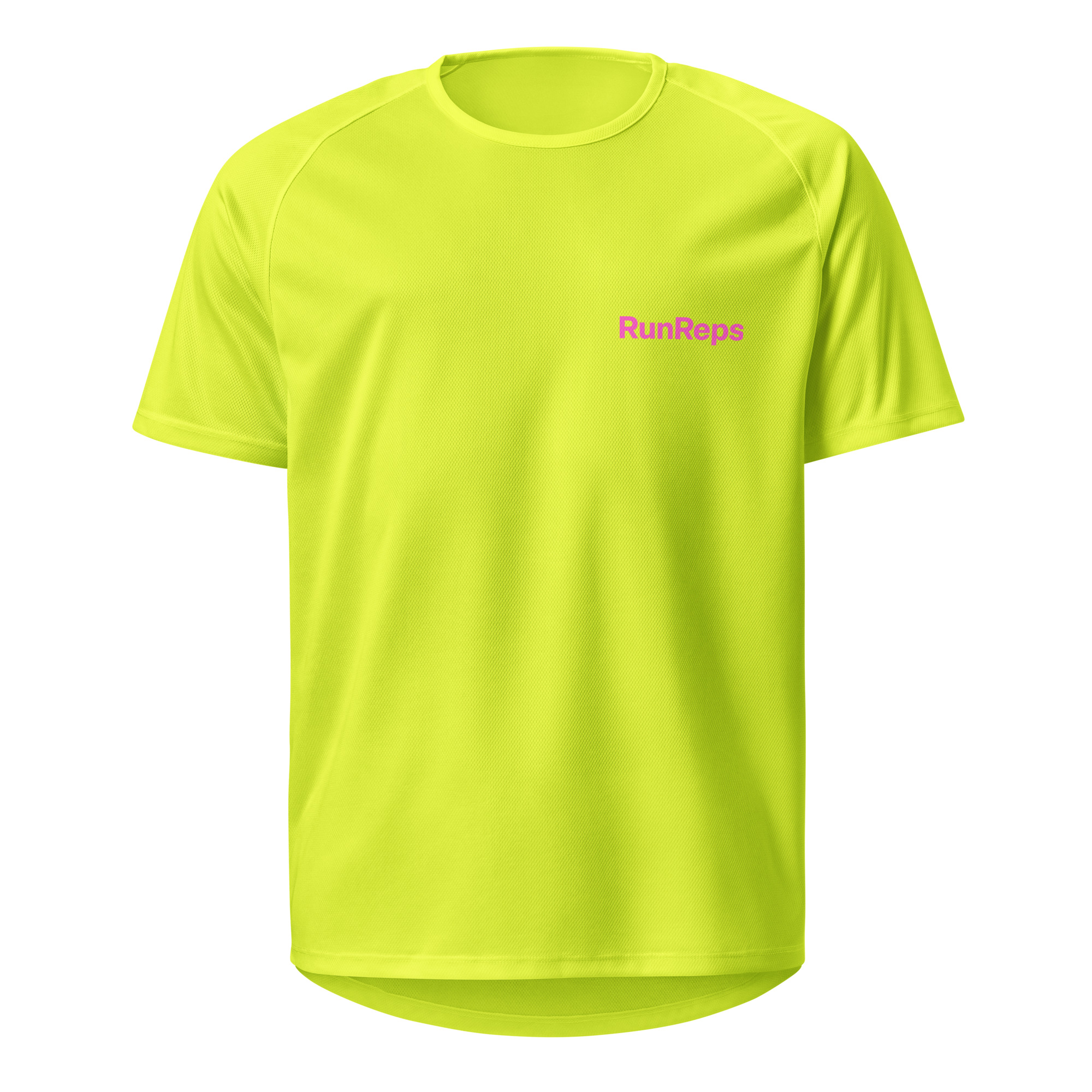
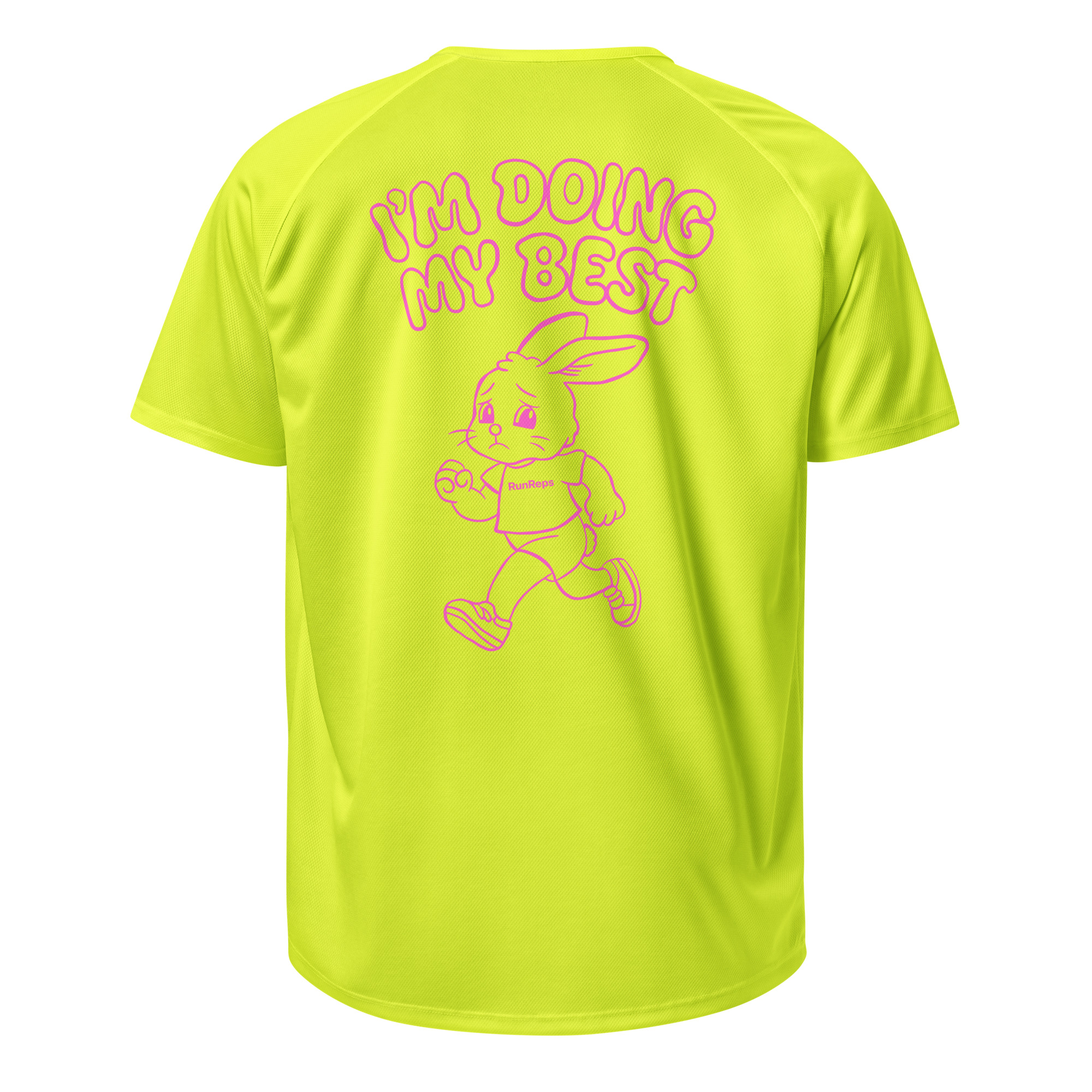
I'm Doing My Best Running Jersey
Lightweight, breathable unisex sports jersey in neon yellow. Designed for runners who keep showing up.
Free worldwide shipping on select orders
RunReps works with retail partners through the Awin affiliate network and earns a commission on qualifying purchases at no extra cost to you.


