You step off the treadmill after a solid 5:30 min/km session, feeling strong. The next morning you head outside, set the same target, and by kilometre two you are labouring at 5:45 min/km with your heart rate five beats higher. Something is clearly different – but what? And should you care?

The treadmill vs road running pace debate has been running (pun intended) for decades. Runners argue about it in forums, coaches give conflicting advice, and most people just pick a side and stop thinking about it. The truth is more useful than either camp admits: the difference is real, it is measurable, and understanding it will make your training sharper whether you run indoors, outdoors, or both.
Why Treadmill Pace and Road Pace Are Never the Same
The biggest factor is wind resistance. When you run outside, you push your body through the air. That costs energy. On a treadmill, the belt moves beneath you and the air stays still – your body is essentially stationary relative to the room. A landmark study by Jones and Doust, published in the Journal of Sports Sciences (1996), found that the energy cost of overcoming air resistance at typical running speeds accounts for 2-10% of total energy expenditure, depending on pace. Faster runners lose more to drag because air resistance increases with the square of velocity.
At a recreational pace of 6:00 min/km (10 km/h), the effect is modest – roughly 2-4% of your energy output. At a competitive pace of 4:00 min/km (15 km/h), it climbs to 6-8%. This means the treadmill advantage is not a fixed number. It scales with how fast you are running.
But wind resistance is not the whole story. There are several other factors that shift the comparison:
- Belt assistance: The treadmill belt helps pull your foot backward during the stance phase, reducing the demand on your hamstrings and glutes. You do slightly less propulsive work per stride.
- Terrain variability: Roads are never perfectly flat. Micro-undulations, cambers, and surface changes all add small energy costs that accumulate over a run.
- Temperature regulation: Outdoor wind provides natural cooling. On a treadmill, heat builds up faster because you are not moving through air, which can raise heart rate and perceived effort – even if pace stays constant.
- Proprioceptive differences: Running on a fixed belt with no lateral variation means fewer stabiliser muscles are engaged. This makes treadmill running feel mechanically easier but also means it trains fewer movement patterns.
The 1% Incline Rule – Useful Shortcut or Oversimplification?

You have probably heard this one: set the treadmill to 1% incline and it matches the effort of flat road running. This advice traces back to the same Jones and Doust study, which concluded that a 1% treadmill grade compensated for the lack of air resistance at speeds between 10.5 and 14.4 km/h (roughly 4:10-5:43 min/km). Treadmill consoles usually speak km/h while your plan is written in min/km, so it is worth converting the belt speed before you decide whether you are inside that band. Outdoors, that same effort-versus-gradient trade-off is exactly what grade adjusted pace measures on real hills.
It is a useful starting point. But it has limitations that rarely get mentioned.
First, the 1% figure was calibrated for a specific speed range. If you run slower than 10 km/h (6:00 min/km or slower), the air resistance effect is smaller and 1% may actually overcorrect. If you run faster than 15 km/h (4:00 min/km), 1% may not be enough. Second, the study was conducted with trained male runners in laboratory conditions. Individual variation in running economy, body size, and biomechanics means the “correct” incline for you might be 0.5% or 1.5%.
Research by Riley et al. in Medicine and Science in Sports and Exercise (2008) found that biomechanical differences between treadmill and overground running – including shorter stride length and higher cadence on the treadmill – persist even with a 1% grade. The incline addresses the energy cost gap but does not make the movement pattern identical.
The practical takeaway: 1% is a reasonable default for moderate paces. But if you want a more precise treadmill pace conversion for your specific speed, the Treadmill Incline Pace Calculator gives you a personalised conversion that accounts for speed and gradient together.
How Much Faster Are You Really Running on a Treadmill?
Here is a practical comparison at common training paces, assuming flat road conditions, no wind, and a 0% treadmill incline:
| Treadmill pace | Approximate road equivalent | Difference |
|---|---|---|
| 5:00 min/km | 5:08-5:15 min/km | 8-15 sec/km |
| 5:30 min/km | 5:36-5:42 min/km | 6-12 sec/km |
| 6:00 min/km | 6:05-6:10 min/km | 5-10 sec/km |
| 6:30 min/km | 6:34-6:38 min/km | 4-8 sec/km |
| 7:00 min/km | 7:03-7:06 min/km | 3-6 sec/km |
These ranges account for individual variation. The key pattern: the faster you run, the bigger the gap. At easy paces, the difference is small enough to ignore for most training purposes. At threshold and interval paces, it becomes meaningful.
For a conversion tailored to your exact pace and incline setting, use the Treadmill Incline Pace Calculator.
When the Difference Matters – and When It Does Not
This is where most articles on treadmill vs road running pace stop. They give you the science and leave you to figure out the application. Here is what it actually means for your training.
It does not matter for easy runs
If you are running at an easy, conversational pace, a 5-10 sec/km difference is irrelevant. Easy runs should be governed by effort, not pace. Whether you run 6:00 min/km on the treadmill or 6:08 min/km on the road, your aerobic system is getting the same stimulus if your heart rate and breathing are in the same zone. If you want to check that, the guide to heart rate zones for runners explains how to use HR to anchor your easy effort.
It matters for tempo and threshold work
Threshold training works within a narrow pace band. If your lactate threshold pace is 4:50 min/km outdoors and you set the treadmill to 4:50 min/km at 0% incline, you are actually running slightly under threshold effort. Over a 20-minute tempo run, that small gap adds up. Either increase your treadmill speed by 5-10 sec/km or add a 1% incline to close the gap.
It matters a lot for race-specific sessions
Consider Sarah, a club runner targeting a 1:50 half marathon (5:13 min/km). She does most of her training on the treadmill through winter. Her long runs feel comfortable at 5:30 min/km. Her tempo sessions hit 5:10 min/km with good control. Race day arrives, she heads outside, and within 5 km she is working harder than expected at the same paces. The 8-12 sec/km gap at her tempo pace, combined with wind, terrain, and the mental challenge of self-pacing (no belt to hold you honest), means her race effort is significantly higher than her training prepared her for.
Sarah would have been better served by either: (a) running her treadmill sessions 5-10 sec/km faster than her outdoor target pace, (b) adding 1% incline to all sessions, or (c) doing at least one key session per week outdoors. Most coaches recommend option (c) whenever possible.
How to Make Treadmill and Road Training Work Together

The treadmill is a brilliant training tool when you use it with open eyes. Here is a practical framework:
- Know your offset. Run the same route outdoors and the same distance on the treadmill at the same perceived effort within the same week. Compare paces. That is your personal offset. For most runners it sits between 5 and 15 sec/km.
- Apply the offset to structured sessions. If your plan calls for 5 x 1 km at 4:40 min/km and that is an outdoor target, run them at 4:30-4:35 min/km on the treadmill (0% incline) or at 4:40 min/km with 1% incline.
- Use effort as the anchor. Pace is a proxy for effort. Heart rate, breathing rate, and RPE (rate of perceived exertion) are the real measures. If your treadmill pace is producing the right effort response, the number on the screen matters less than you think. Understanding what your running pace actually tells you helps put the numbers in perspective.
- Do race-specific work outdoors. At minimum, your longest run and one quality session per week should be on the road (or trail) you plan to race on. This trains pacing instinct, terrain adaptation, and mental resilience that the treadmill cannot replicate.
- Use the treadmill for what it does best. Controlled intervals (the belt holds you honest), heat adaptation (run in a warm room without dehydration risk from sun), and rehabilitation (consistent, flat surface with lower impact).
If you run hilly routes outdoors and want to simulate them on the treadmill, the principles are the same as effort-based hill running – adjust the incline and let pace follow effort, not the other way around.
Calibration Warning: Not All Treadmills Are Accurate
Before you obsess over treadmill pace conversion, there is a practical problem worth mentioning: many treadmills are not accurately calibrated. Consumer-grade machines can be off by 5-10% in either direction. A displayed 5:00 min/km might actually be 4:45 or 5:15 min/km. Gym treadmills that see heavy use are especially prone to belt slip and speed drift. If the belt only speaks km/h, pace conversion turns it into the min/km your plan is written in before you touch the speed dial.
If you suspect your treadmill is inaccurate, the simplest test is to count belt revolutions over 60 seconds, measure the belt length, and calculate actual speed. Or wear a footpod or GPS watch on the treadmill – though GPS will be unreliable indoors, a well-calibrated footpod or accelerometer-based watch will give you a reasonable cross-check.
Frequently Asked Questions
Is running on a treadmill the same as running outside?
No. The lack of wind resistance, the belt assisting your stride, consistent flat surface, and reduced need for stabilisation all make treadmill running biomechanically different. The energy cost is roughly 2-8% lower than outdoor running at the same pace, depending on your speed. However, the cardiovascular and muscular training benefits are very similar, making the treadmill a valid training tool when used with appropriate pace adjustments.
Should I always set the treadmill to 1% incline?
The 1% incline recommendation comes from research showing it compensates for the absence of air resistance at moderate speeds (10.5-14.4 km/h). It is a reasonable default for paces between 4:10 and 5:43 min/km. If you run slower than 6:00 min/km, 0.5% may be more appropriate. If you run faster than 4:00 min/km, you may need 1.5-2%. Use the Treadmill Incline Pace Calculator for a conversion matched to your exact speed.
Why does treadmill running feel easier but my heart rate is higher?
This is common and usually comes down to heat. Without airflow from forward movement, your body temperature rises faster on a treadmill. Your heart rate increases to support both the running effort and thermoregulation (pumping blood to the skin for cooling). A fan pointed at you can reduce this effect significantly. If your heart rate is consistently 5-10 beats higher on the treadmill at the same perceived effort, heat is almost certainly the cause.
Can I train for a road race entirely on a treadmill?
You can build a strong aerobic base and solid fitness on a treadmill. Many runners have completed respectable marathons with predominantly treadmill training. However, you will miss out on terrain adaptation, self-pacing skill, and weather exposure. If you must train mostly indoors, aim for at least one outdoor run per week – ideally your longest run or a race-pace session – to bridge the gap. Adjust your treadmill paces using a conversion tool so your effort matches your outdoor targets. For building a structured plan that accounts for your environment, see the running plan generator.
How do I convert my treadmill pace to an outdoor pace?
As a rough guide, add 5-15 sec/km to your treadmill pace to estimate your outdoor equivalent (assuming 0% incline, no wind, and flat terrain). The exact offset depends on your speed – faster runners have a larger gap. For a precise conversion that factors in incline and speed, use the Treadmill Incline Pace Calculator.
This article is for informational purposes only and does not constitute medical advice. If you are returning from injury or have a cardiovascular condition, consult a healthcare professional before adjusting your training intensity based on pace conversions.
Race day essentials
Having the right kit on race day removes one more variable. These items help you execute your race plan with confidence.
Garmin Forerunner 265
Live pace alerts and lap tracking keep you honest on race day. The AMOLED display is easy to read mid-race.
View on AmazonSiS Go Energy Gels
Isotonic gels that go down easily during a race. No need to find a water station to wash them down.
View on AmazonRunning Belt
Carry gels, phone, and keys without bouncing. A simple belt keeps everything secure so you can focus on your pace.
View on AmazonNike Pegasus
Handles easy runs, tempo work, and long runs. A versatile daily trainer that suits most training plans.
View on Amazon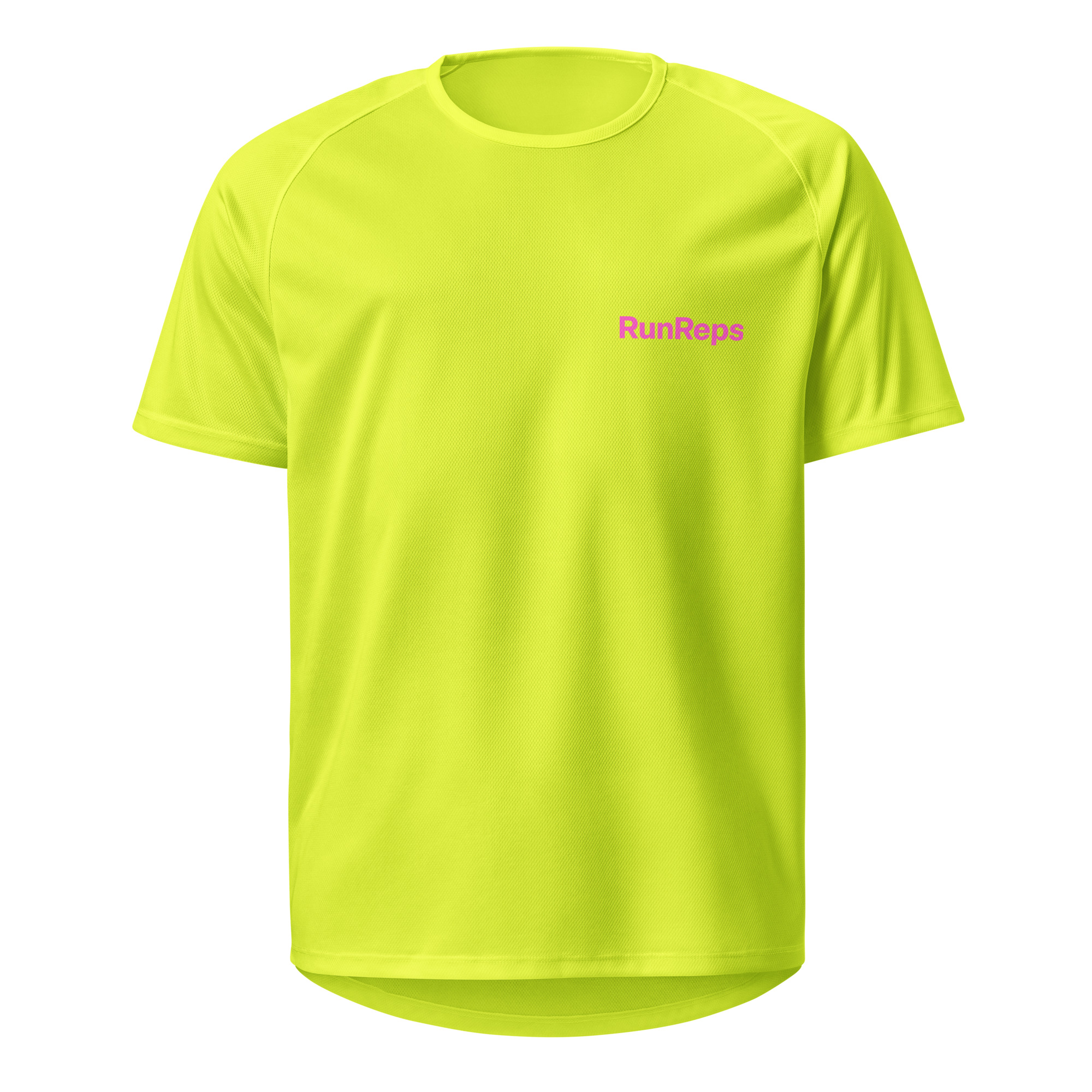
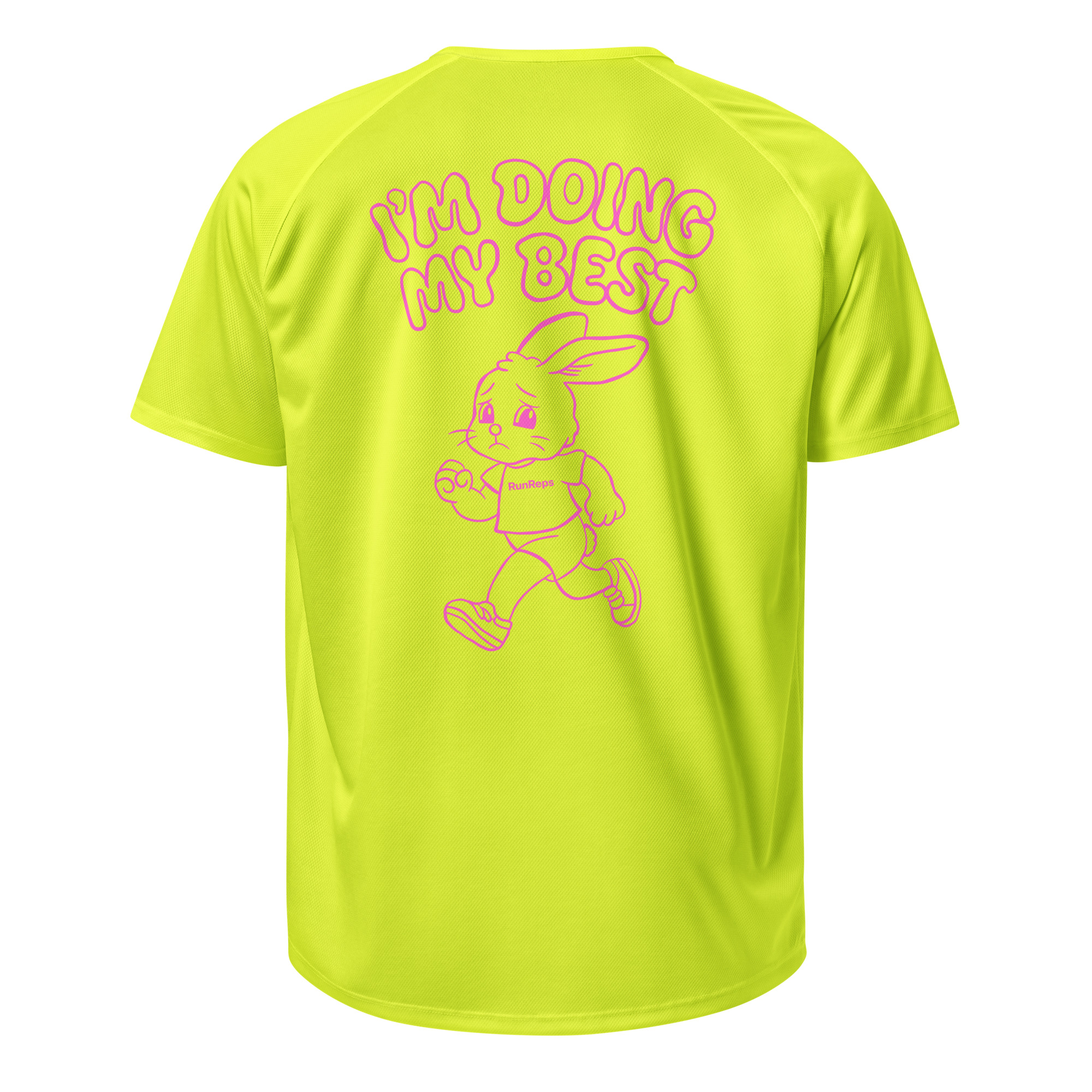
I'm Doing My Best Running Jersey
Lightweight, breathable unisex sports jersey in neon yellow. Designed for runners who keep showing up.
Free worldwide shipping on select orders
RunReps works with retail partners through the Awin affiliate network and earns a commission on qualifying purchases at no extra cost to you.