Brigid Kosgei smashed the Tokyo Marathon course record on 1 March 2026, crossing the line in 2:14:29 – roughly 90 seconds faster than the previous best. Tadese Takele took the men’s title for the second year running in a tight 2:03:37 sprint finish. The course did what it always does: rewarded smart pacing and punished anyone who went out too fast.
Whether you ran Tokyo this year or you are planning for a future edition, this guide breaks down the full 42.195 km course, gives you realistic pace targets based on your current fitness, and shows you how to predict your finish time using your own race data.
Tokyo Marathon 2026 results
The 2026 edition took place on Saturday 1 March. Kosgei’s women’s course record and Takele’s repeat victory headlined an exceptional day of racing across all categories.
Men’s elite top 10
| # | Name | Nation | Time |
|---|---|---|---|
| 1 | Tadese Takele | ETH | 2:03:37 |
| 2 | Geoffrey Toroitich | KEN | 2:03:37 |
| 3 | Alexander Mutiso Munyao | KEN | 2:03:38 |
| 4 | Daniel Mateiko | KEN | 2:03:44 |
| 5 | Muktar Edris | ETH | 2:04:07 |
| 6 | Iliass Aouani | ITA | 2:04:26 |
| 7 | Selemon Barega | ETH | 2:05:00 |
| 8 | Seifu Tura | ETH | 2:05:02 |
| 9 | Vincent Kipkemoi Ngetich | KEN | 2:05:21 |
| 10 | Shifera Tamru | ETH | 2:05:56 |
Women’s elite top 10
| # | Name | Nation | Time |
|---|---|---|---|
| 1 | Brigid Kosgei | KEN | 2:14:29 |
| 2 | Bertukan Welde | ETH | 2:16:36 |
| 3 | Hawi Feysa | ETH | 2:17:39 |
| 4 | Sutume Asefa Kebede | ETH | 2:17:39 |
| 5 | Megertu Alemu | ETH | 2:18:50 |
| 6 | Viola Cheptoo | KEN | 2:19:05 |
| 7 | Mestawut Fikir | ETH | 2:20:00 |
| 8 | Aberu Ayana | ETH | 2:20:30 |
| 9 | Pascalia Jepkogei | KEN | 2:21:39 |
| 10 | Ai Hosoda | JPN | 2:23:39 |
Wheelchair men’s top 10
| # | Name | Nation | Time |
|---|---|---|---|
| 1 | Marcel Hug | SUI | 1:21:09 |
| 2 | Xingchuan Luo | CHN | 1:28:08 |
| 3 | Watanabe Sho | JPN | 1:33:10 |
| 4 | Samuel Rizzo | AUS | 1:33:12 |
| 5 | Geert Schipper | NED | 1:33:12 |
| 6 | Nishida Hiroki | JPN | 1:33:19 |
| 7 | Kishizawa Hiroki | JPN | 1:36:15 |
| 8 | Hokinoue Kota | JPN | 1:36:16 |
| 9 | Higuchi Masayuki | JPN | 1:36:16 |
| 10 | Kawamuro Ryuichi | JPN | 1:37:08 |
Wheelchair women’s top 10
| # | Name | Nation | Time |
|---|---|---|---|
| 1 | Catherine Debrunner | SUI | 1:37:15 |
| 2 | Eden Rainbow Cooper | GBR | 1:41:13 |
| 3 | Zhaoqian Zhou | CHN | 1:41:13 |
| 4 | Tatyana McFadden | USA | 1:41:15 |
| 5 | Vanessa de Souza | BRA | 1:41:20 |
| 6 | Tsuchida Wakako | JPN | 1:41:20 |
| 7 | Nakamine Tsubasa | JPN | 1:41:20 |
| 8 | Manuela Schar | SUI | 1:42:17 |
| 9 | Patricia Eachus | SUI | 1:47:34 |
| 10 | Madison de Rozario | AUS | 1:52:08 |
What makes the Tokyo Marathon course different
Tokyo is a World Marathon Majors event and one of the six Abbott World Marathon Majors races. The course was redesigned in 2017, replacing the old finish at Tokyo Big Sight with a new route ending outside Tokyo Station. That change removed the punishing late-race bridge crossing and made the course significantly faster.
According to World Athletics, Tokyo has produced some of the fastest marathon times in Asia. The course sits almost entirely at sea level, with a net elevation drop over the first 30 km that can lull runners into a false sense of pace security. The total elevation gain across the full course is roughly 42 m – modest by marathon standards – but the undulations between kilometres 33 and 39 arrive exactly when glycogen stores are running low.
The Japan Association of Athletics Federations (JAAF) sanctions the event under World Athletics rules, and the course is certified to the standard 42.195 km distance with timing mats at every 5 km split.


Course breakdown: kilometre by kilometre
Start to 10 km – Shinjuku to Iidabashi
You begin at the base of the Tokyo Metropolitan Government Building in Shinjuku. The first kilometre drops gently as you head east along Yasukuni-dori. By 5 km you are running through Iidabashi, and the pace feels almost too comfortable. This is where most runners make their first mistake – going 10 to 15 seconds per kilometre faster than planned because the road is flat, the crowds are enormous, and the adrenaline is still high.
Target: run your planned pace, not the pace the course is offering you. If your goal is 5:00 min/km, run 5:00 min/km. Bank nothing.
10 km to 21 km – Nihonbashi to Asakusa and back
This is the scenic section. You pass through Nihonbashi, up to Asakusa (where you can glimpse Tokyo Skytree if you look up at the right moment), and back down. The roads remain flat. The turnaround at Asakusa around 15 km is a mental marker – you are running back towards the centre of the city now.
At the halfway point, your split should be dead on target. If you are more than 30 seconds ahead of your planned half split, you have gone out too fast. A runner targeting a 3:30:00 finish should pass halfway in approximately 1:45:00 to 1:46:00 – not 1:42:00.
21 km to 30 km – Ginza and the southern loop
The course passes through Ginza around 23 km. The streets narrow slightly, and the crowd noise intensifies. Between 25 km and 30 km, you run south through Shinagawa-area streets before turning back north. The terrain is still largely flat, but your legs no longer feel that way.
30 km to 42.195 km – the bridges and the finish at Tokyo Station
The final 12 km include two bridge crossings and a series of gentle but relentless rises that feel far worse than they look on paper. Between 35 km and 38 km, the course crosses over water and the exposed bridges offer no crowd shelter and, on some years, a stiff headwind.
If you have paced well, this is where you gain places. Runners who went out conservatively will be overtaking faded runners in waves. The finish outside Tokyo Station is flat, fast, and lined with noise. You want to arrive here with something left.
Fastest times in Tokyo Marathon history

Tokyo has produced world-class performances since the course redesign in 2017. These are the all-time fastest performances on the Tokyo Marathon course, updated to include the 2026 results.
Men’s all-time top 10
| # | Time | Name | Nation | Date |
|---|---|---|---|---|
| 1 | 2:02:16 | Benson Kipruto | KEN | 03 Mar 2024 |
| 2 | 2:02:40 | Eliud Kipchoge | KEN | 06 Mar 2022 |
| 3 | 2:02:55 | Timothy Kiplagat | KEN | 03 Mar 2024 |
| 4 | 2:03:13 | Amos Kipruto | KEN | 06 Mar 2022 |
| 5 | 2:03:23 | Tadese Takele | ETH | 02 Mar 2025 |
| 6 | 2:03:37 | Tadese Takele | ETH | 01 Mar 2026 |
| 7 | 2:03:37 | Geoffrey Toroitich | KEN | 01 Mar 2026 |
| 8 | 2:03:38 | Alexander Mutiso Munyao | KEN | 01 Mar 2026 |
| 9 | 2:03:44 | Daniel Mateiko | KEN | 01 Mar 2026 |
| 10 | 2:03:51 | Deresa Geleta | ETH | 02 Mar 2025 |
Women’s all-time top 10
| # | Time | Name | Nation | Date |
|---|---|---|---|---|
| 1 | 2:14:29 | Brigid Kosgei | KEN | 01 Mar 2026 |
| 2 | 2:15:55 | Sutume Asefa Kebede | ETH | 03 Mar 2024 |
| 3 | 2:16:02 | Brigid Kosgei | KEN | 06 Mar 2022 |
| 4 | 2:16:14 | Rosemary Wanjiru | KEN | 03 Mar 2024 |
| 5 | 2:16:28 | Rosemary Wanjiru | KEN | 05 Mar 2023 |
| 6 | 2:16:36 | Bertukan Welde | ETH | 01 Mar 2026 |
| 7 | 2:16:56 | Winfridah Moraa Moseti | KEN | 02 Mar 2025 |
| 8 | 2:16:58 | Amane Beriso Shankule | ETH | 03 Mar 2024 |
| 9 | 2:17:00 | Hawi Feysa | ETH | 02 Mar 2025 |
| 10 | 2:17:39 | Hawi Feysa | ETH | 01 Mar 2026 |
Wheelchair men’s all-time top 5
| # | Time | Name | Nation | Date |
|---|---|---|---|---|
| 1 | 1:19:14 | Tomoki Suzuki | JPN | 02 Mar 2025 |
| 2 | 1:20:57 | Marcel Hug | SUI | 05 Mar 2023 |
| 3 | 1:21:09 | Marcel Hug | SUI | 01 Mar 2026 |
| 4 | 1:21:52 | Tomoki Suzuki | JPN | 01 Mar 2020 |
| 5 | 1:22:16 | Marcel Hug | SUI | 06 Mar 2022 |
Wheelchair women’s all-time top 5
| # | Time | Name | Nation | Date |
|---|---|---|---|---|
| 1 | 1:35:56 | Catherine Debrunner | SUI | 02 Mar 2025 |
| 2 | 1:36:28 | Susannah Scaroni | USA | 02 Mar 2025 |
| 3 | 1:36:43 | Manuela Schar | SUI | 05 Mar 2023 |
| 4 | 1:37:15 | Catherine Debrunner | SUI | 01 Mar 2026 |
| 5 | 1:37:46 | Zhaoqian Zhou | CHN | 02 Mar 2025 |
Pace targets by finish time goal
The table below shows target splits for common finish times. These assume even pacing with a slight positive split in the second half – the most realistic strategy for Tokyo given the late-race bridges.
| Finish time goal | Average pace (min/km) | Half split target | 30 km split target |
|---|---|---|---|
| 2:59:59 | 4:16 min/km | 1:29:30 | 2:07:00 |
| 3:14:59 | 4:37 min/km | 1:37:00 | 2:17:30 |
| 3:29:59 | 4:58 min/km | 1:44:30 | 2:28:00 |
| 3:44:59 | 5:20 min/km | 1:52:00 | 2:38:30 |
| 3:59:59 | 5:41 min/km | 1:59:30 | 2:49:00 |
| 4:29:59 | 6:24 min/km | 2:14:30 | 3:10:30 |
| 4:59:59 | 7:07 min/km | 2:29:30 | 3:32:00 |
These are starting points. Your actual targets should reflect your recent training data. Estimate your race time using a recent 10 km or half marathon result to get a finish time prediction built around your fitness, not a generic table.
How to predict your Tokyo Marathon finish time
Generic pace charts give you a rough target. A proper finish time prediction uses your actual race data – a recent 10 km time, a half marathon result, or even a solid parkrun effort – and applies validated prediction models to estimate what you can realistically achieve over 42.195 km.
The Riegel formula, widely used in distance running, adjusts for the non-linear relationship between pace and distance. Running a 50:00 10 km does not mean you will run a 3:31:00 marathon – the fatigue factor over the extra distance adds roughly 5 to 8 % to your average pace.
To get your prediction:
- Take your most recent race result (ideally within the last 8 weeks).
- Enter it into the Estimate Race Time tool.
- Review the predicted marathon time and use it to set your half and 30 km split targets.
A prediction based on real data is always more reliable than a goal pulled from ambition alone. If the predictor says 3:40:00 and you are targeting 3:20:00, something needs to give – and it should not be your race-day pacing strategy.
Pacing mistakes that cost minutes in Tokyo
Tokyo’s flat first half is a trap. Here are the three most common pacing errors and how to avoid them.
Starting 15+ seconds per kilometre too fast. The first 5 km in Tokyo feel like a training run. The crowds carry you. The adrenaline is real. But every second you bank in the first half, you pay back double after 30 km. Set your watch, trust your pace calculator targets, and ignore the runners surging past you at kilometre 3.
Ignoring the bridges after 33 km. The late-race elevation changes are modest on paper – perhaps 10 to 15 m of climbing across a few kilometres. But at 33 km into a marathon, a gentle bridge incline feels like a hill. Adjust your effort, not your pace expectation. Slow by 5 to 10 seconds per kilometre on the bridges and recover on the flat sections.
Racing the clock instead of the course. If you reach 30 km and you are behind target, do not try to make it up. The maths rarely works after 30 km. Hold your current effort, finish strong, and use the data from this race to set a better target next time.
Race day logistics that affect your pacing
A few practical factors specific to Tokyo that can shift your pace if you are not prepared:
- Corral start delays. With over 38,000 runners, your gun-to-chip gap can be 10 to 20 minutes depending on your wave. Your chip time is what matters – do not sprint the first kilometre to make up for a slow corral exit.
- Aid station congestion. Tokyo’s aid stations are well-stocked but crowded. Practice grabbing water at pace. Losing 10 seconds at each station across 8 stops is over a minute on your finish time.
- March weather. Tokyo in early March typically offers temperatures between 6 and 14 degrees Celsius – close to ideal. But humidity can be higher than European runners expect, and a headwind on the exposed bridges is possible. Check conditions 48 hours before the race and adjust your pace target by 5 to 10 seconds per kilometre if temperatures exceed 15 degrees.
Common questions about the Tokyo Marathon
What is a good finish time for the Tokyo Marathon?
That depends entirely on your training and experience. The average finish time across all runners is typically between 4:30:00 and 4:45:00. A “good” time is one that matches your fitness. Use a finish time prediction tool with a recent race result to find a target that reflects your ability, not someone else’s.
Is the Tokyo Marathon course flat?
Mostly, yes. The first 30 km are almost entirely flat with a very gentle net downhill. The final 12 km include two bridge crossings and mild undulations that feel harder than they measure. Total elevation gain is approximately 42 m. It is one of the fastest major marathon courses in the world, but the bridges after 33 km can catch underprepared runners. See the full Tokyo Marathon race page for more details on the course and entry process.
How should I pace the Tokyo Marathon if I am aiming for a PB?
Run even splits or a very slight negative split through halfway. Target your planned pace from the first kilometre – do not go out fast because the course feels easy. Use the pace targets table above as a guide, and refine your splits with a pace calculator before race day. The runners who PB in Tokyo are almost always the ones who run a disciplined first half.
What is the Tokyo Marathon cut-off time?
The official course cut-off is 7 hours from the start of the elite wave. There are also intermediate checkpoints along the course. Runners who fall behind the required pace at these checkpoints may be directed off the course. Check the official race information for the exact checkpoint times for your year.
Who won the Tokyo Marathon 2026?
Tadese Takele (ETH) won the men’s race in 2:03:37, claiming his second consecutive Tokyo title. Brigid Kosgei (KEN) won the women’s race in a course record 2:14:29. Marcel Hug (SUI) and Catherine Debrunner (SUI) won the wheelchair men’s and women’s races respectively.
This article is for informational purposes only. Pacing targets and finish time predictions are estimates based on general models. Individual results depend on training, health, conditions, and race-day execution. Consult a qualified coach or medical professional if you have concerns about your training load or race readiness.
Race day essentials
Having the right kit on race day removes one more variable. These items help you execute your race plan with confidence.
Garmin Forerunner 265
Live pace alerts and lap tracking keep you honest on race day. The AMOLED display is easy to read mid-race.
View on AmazonSiS Go Energy Gels
Isotonic gels that go down easily during a race. No need to find a water station to wash them down.
View on AmazonRunning Belt
Carry gels, phone, and keys without bouncing. A simple belt keeps everything secure so you can focus on your pace.
View on Amazon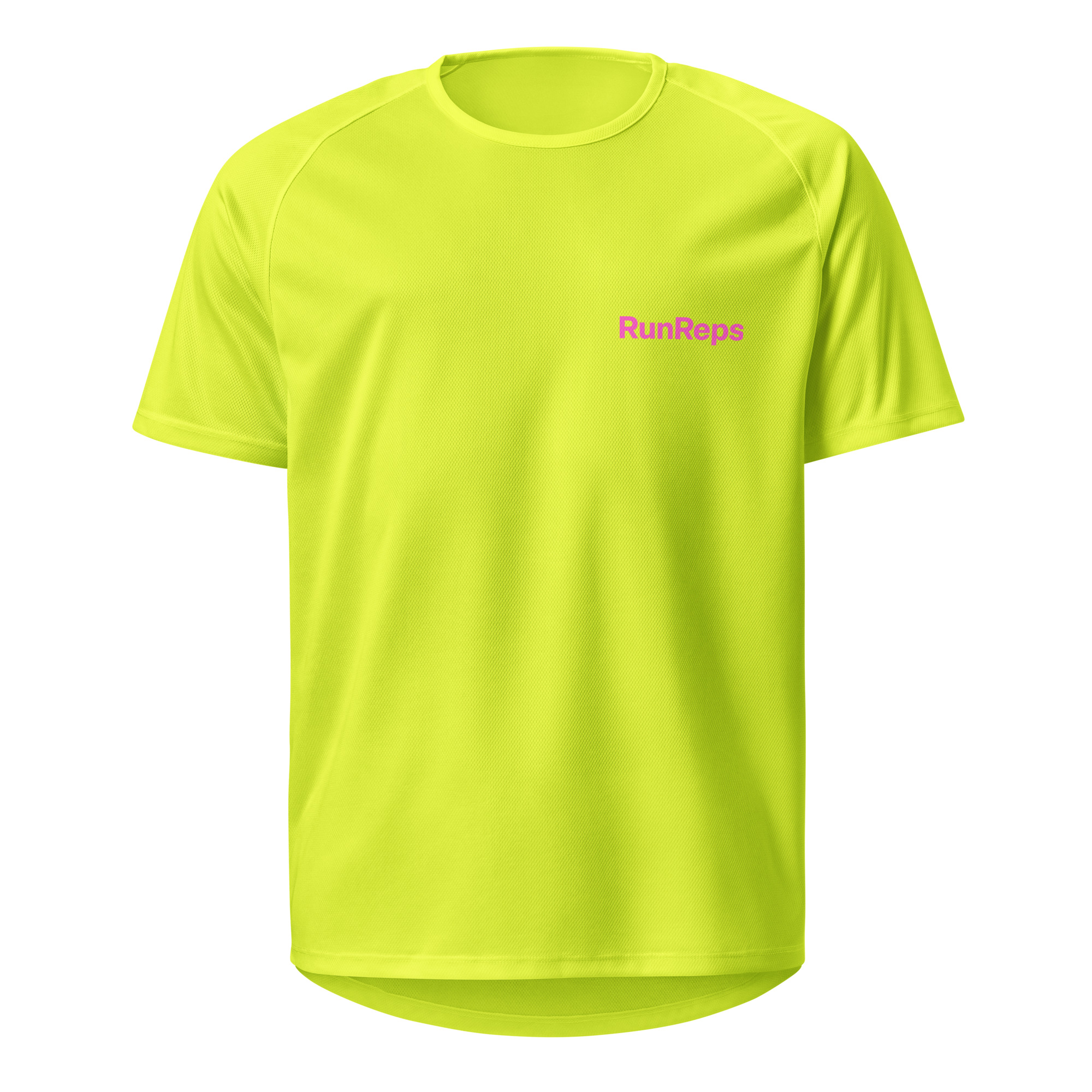
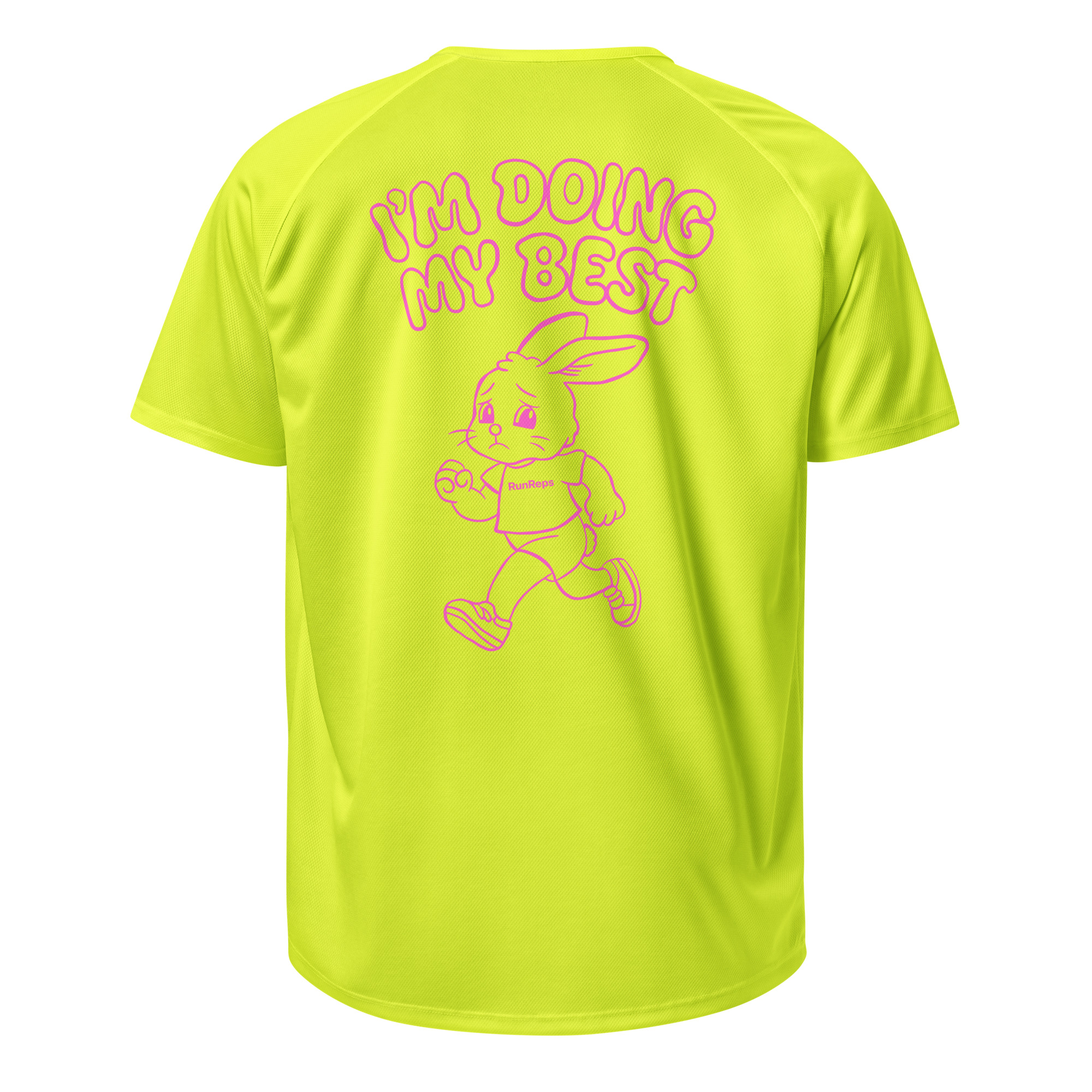
I'm Doing My Best Running Jersey
Lightweight, breathable unisex sports jersey in neon yellow. Designed for runners who keep showing up.
Free worldwide shipping on select orders
RunReps works with retail partners through the Awin affiliate network and earns a commission on qualifying purchases at no extra cost to you.