How to Train for Every Hyrox Station - Exercises and Progressions
Published 20 February 2026
Most Hyrox finishers agree on one thing: the station they trained least for is the one that hurt the most. Wall balls feel brutal when you’ve never done 100 in a row. Sandbag lunges over 100 metres will reduce your legs to concrete if you’ve spent your prep time on the SkiErg. Every station has a weakness pattern - this guide covers how to close each one.
SkiErg (1,000 m)
The SkiErg opens every Hyrox race. It’s the station most runners are least prepared for because it loads the upper body in a way that running doesn’t. The movement demands lat strength, core engagement, and the ability to maintain rhythm at pace.
Key exercises to build SkiErg capacity: • Lat pulldowns and cable pull-downs - build the pulling strength the movement relies on • Band pull-aparts - shoulder health and endurance under fatigue • Plank variations - core stability to stay connected through each pull
On the machine: practise sustained efforts at your target pace. A 1,000 m SkiErg target of 4:30–5:00 for men / 5:00–5:30 for women in the competitive wave is reasonable. Don’t sprint it - you have seven more stations ahead.
Sled Push and Pull (50 m each)
The sled stations are where Hyrox separates people with functional strength from people with only cardiovascular fitness. The sled push requires driving from the legs with low body position - if your hips rise, you lose power and slow down. The pull requires grip endurance and lat strength through a rope-over-hand movement.
Training for sled push: • Heavy goblet squats and front-loaded carries - build the quad strength you need in position • Prowler pushes or sled work if your gym has it - there is no better simulator • Box step-ups with weight - replicate the single-leg drive pattern
Training for sled pull: • Seated cable rows and ring rows - the rope-over-hand pull is a lat-dominant movement • Farmer carries with a slight forward lean - builds the hip and core endurance for the body position • Grip training: dead hangs and barbell holds for 60+ seconds
The sled push and pull come second and third in the race - your legs are already warm, your lungs already working. Training these movements when pre-fatigued (after a short run interval) is more race-specific than training them fresh.
Burpee Broad Jumps (80 m)
Burpee broad jumps are uniquely horrible. They combine the breathlessness of a burpee with the leg-loading of a plyometric jump - repeated over 80 metres. The target is roughly 16–20 jumps, depending on your jump distance.
What makes them hard: the transition between the floor-based burpee and the explosive jump is metabolically punishing. Your heart rate will spike rapidly.
Training approach: • Standard burpees for conditioning - get comfortable dropping to the floor and recovering • Broad jumps separately - 3 sets of 10 jumps to build leg power and landing mechanics • Combined burpee broad jump practice in training - 5–10 at a time to groove the movement
One key technique note: land with slightly bent knees and immediately load into the next rep. Runners often land stiff-legged, which bleeds distance and increases ground contact time.
Rowing (1,000 m)
The rowing station is the one most runners feel comfortable with - it’s a cardio machine, after all. But Hyrox rowing comes at kilometre 5 of the race, when your legs are already carrying sled fatigue. The coordination required (legs, core, arms in sequence) breaks down under tiredness.
Target splits: For the competitive wave, aim for 4:00–4:20 per 1,000 m for men, 4:30–5:00 for women.
Training for rowing: • 30–60 second hard efforts with 90 seconds rest - build power output under short recovery • Steady 2,000 m efforts at controlled pace - build aerobic base on the machine • Legs-only rowing - forces correct leg drive and helps when arms are pre-fatigued from the sled
The most common error: overusing the arms at the expense of leg drive. The legs generate around 65% of rowing power. If you’re pulling with your arms early in the stroke, you’re working harder for less output.
Farmers Carry (200 m)
Two hundred metres of farmers carry sounds manageable until you consider it comes after 6 km of running and three demanding stations. The carry is a grip and core challenge disguised as a straightforward pick-and-walk exercise.
Standard weights: Men carry 2 x 24 kg kettlebells; women carry 2 x 16 kg. Pro athletes carry significantly more.
Training: • Kettlebell farmers carry in training - build to 200 m without stopping • Dead hangs and bar hangs for 60–90 seconds - improve raw grip endurance • Suitcase carries (one-sided) - develop the core anti-rotation stability the double carry demands
Technique: keep shoulders packed back and down, chest tall, and walk at a controlled pace. Swinging the kettlebells side-to-side causes them to drag on your legs and increases the energy cost. Aim to complete the 200 m in as few sets as possible - ideally without putting the weights down.
Sandbag Lunges (100 m)
Sandbag lunges over 100 metres are where the quad fatigue from the sled stations comes back to collect. You are loading your quads and glutes in a position you’ve already taxed heavily. The sandbag sits across the chest (or on one shoulder, depending on preference) and shifts your centre of gravity forward.
Standard weights: Men use 20 kg, women use 10 kg.
Training: • Goblet squat lunges with a dumbbell or kettlebell at chest height - mimics the carry position • Walking lunges with increasing load - build to 50+ metres without stopping • Bulgarian split squats - develop the unilateral leg strength the movement demands
One tactic: some athletes find alternating-leg lunges (step, step) faster than continuous lunges per leg. Practise both in training and choose what you can sustain at race pace. The goal is no more than 1–2 pauses over 100 metres.
Wall Balls (100 reps)
Wall balls close every Hyrox race and punish athletes who haven’t specifically trained for them. The movement requires squatting to parallel and throwing a medicine ball to a target at 9 ft (men) or 8 ft (women). Standard weights are 6 kg for men in the Open wave, 4 kg for women.
100 wall balls is a lot when your legs have covered 8 km and seven stations. Athletes who haven’t trained the movement often break into sets of 5–10 by rep 40, losing significant time.
Training: • Build wall ball capacity with large sets - aim for sets of 20–30 in training • Thrusters (barbell or dumbbell) - develop the squat-to-press mechanics under fatigue • Box squats - reinforce sitting back into the squat rather than allowing knee cave
Technique tip: use a rhythm. Throw, catch, squat in one fluid movement without pausing at the top or bottom. Athletes who pause at the top to reset lose far more time than those who maintain continuous motion. Practise your breathing pattern - exhale on the throw, inhale on the descent.
How to structure your station training
Add 2–3 dedicated station sessions per week on top of your running base. Structure them as:
Week 1–4: Practise each station movement in isolation. Build strength and technique without time pressure.
Week 5‘–8: Combine 2–3 stations in a single session with short running intervals between them. For example: 1 km run - SkiErg 500 m - 1 km run - wall balls 50 reps - 1 km run.
Week 9–12: Full race simulations. Run 8 km with all 8 stations at reduced weight or reduced reps. Treat these as dress rehearsals to develop pacing strategy and identify which stations are still weak.
Common questions
Which Hyrox station takes the longest for most people?
Wall balls and sandbag lunges typically take the most time for recreational athletes. Wall balls require 100 reps regardless of how you feel, and sandbag lunges over 100 metres will expose any weakness in quad endurance. The sled push is often the most physically demanding but is shorter in duration.
How heavy is the sled in Hyrox?
In the Open division, men push 152 kg (including sled weight, typically around 102 kg + 50 kg added) and women push 102 kg. Pro division loads are significantly higher. The sled is pushed 50 metres forward and then pulled back 50 metres on a rope.
Can I train for Hyrox without a sled?
Yes. While having access to a sled or prowler is ideal, you can build the relevant strength with goblet squats, front-loaded carries, and heavy step-ups for the push; and with rows, lat pulldowns, and rope climbs for the pull. Many athletes complete their first Hyrox with minimal sled-specific preparation - though a few practice sessions before race day are valuable.
How long should I train before my first Hyrox?
Aim for at least 12 weeks of structured preparation if you already have a running base and some gym experience. If you’re new to running or strength training, allow 16–20 weeks. The key is building both running endurance and station-specific strength simultaneously, not one at the expense of the other.
Is Hyrox harder for runners or gym-goers?
Both groups face different challenges. Runners tend to struggle with the functional strength stations - particularly the sled push, sandbag lunges, and wall balls. Gym-goers tend to struggle with the 8 km of running and managing heart rate across the full race. Neither background is sufficient alone. The best Hyrox athletes train both simultaneously.
Tools to use alongside this guide
Hyrox training plans
Detailed, printable plans with session-by-session breakdowns, nutrition guidance, and race-day preparation.
12-Week Hyrox Training Plan
£7.99
Hyrox 8 Week Training Plan - 3 Days/Week
£7.99
Hyrox 8 Week Training Plan - 5 Days/Week
£7.99
Gear for your Hyrox training
Hyrox demands versatile equipment that handles both running segments and functional stations. These picks cover the essentials.
Garmin Forerunner 265
Track your running splits and station times with live pace alerts and an AMOLED display. The best mid-range GPS watch for mixed training.
View on AmazonNike Pegasus
A versatile daily trainer that handles road running and gym floor work equally well. Reliable cushioning for high-volume Hyrox prep.
View on AmazonFoam Roller
Hyrox training is hard on legs and shoulders. Regular foam rolling helps you recover between sessions and stay consistent.
View on Amazon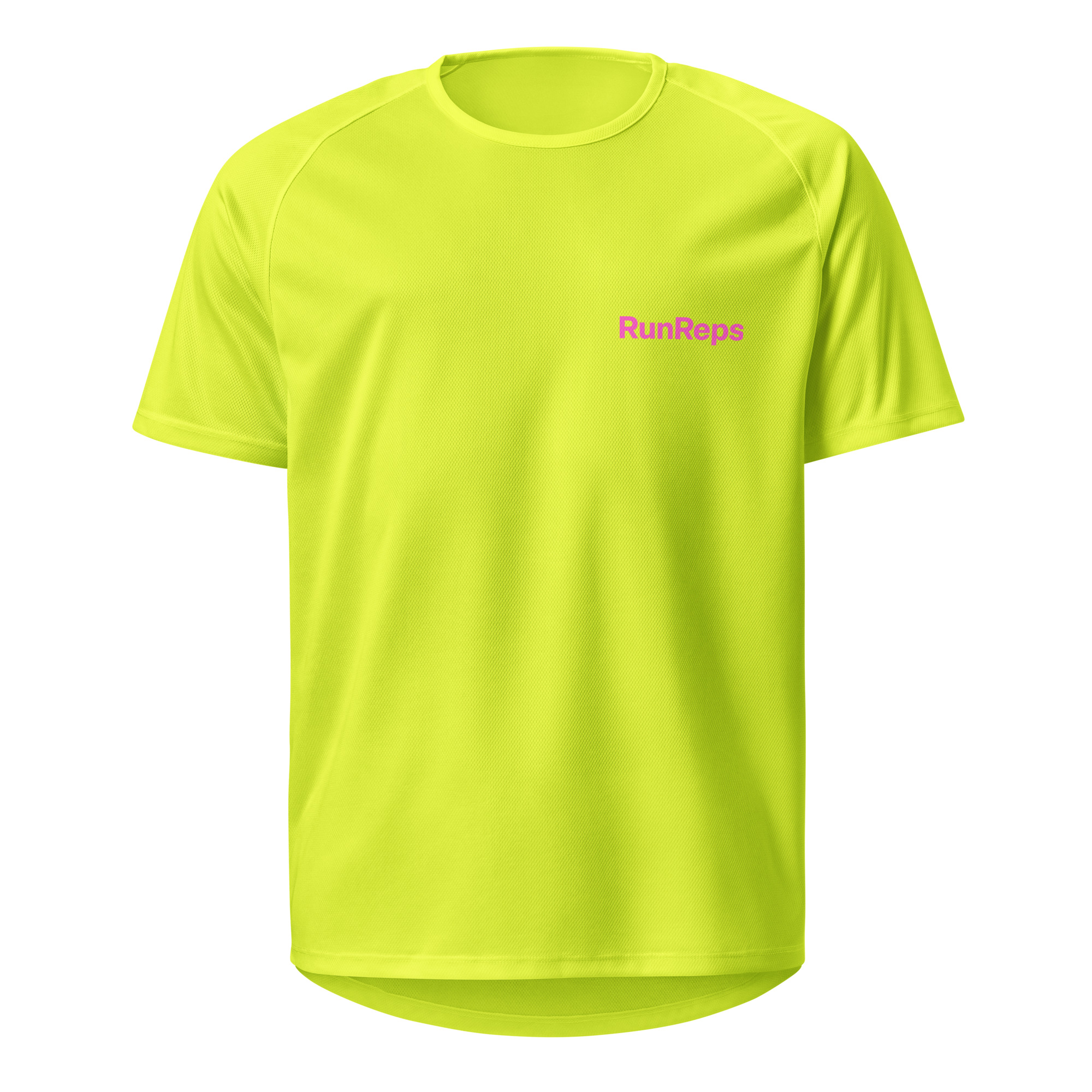
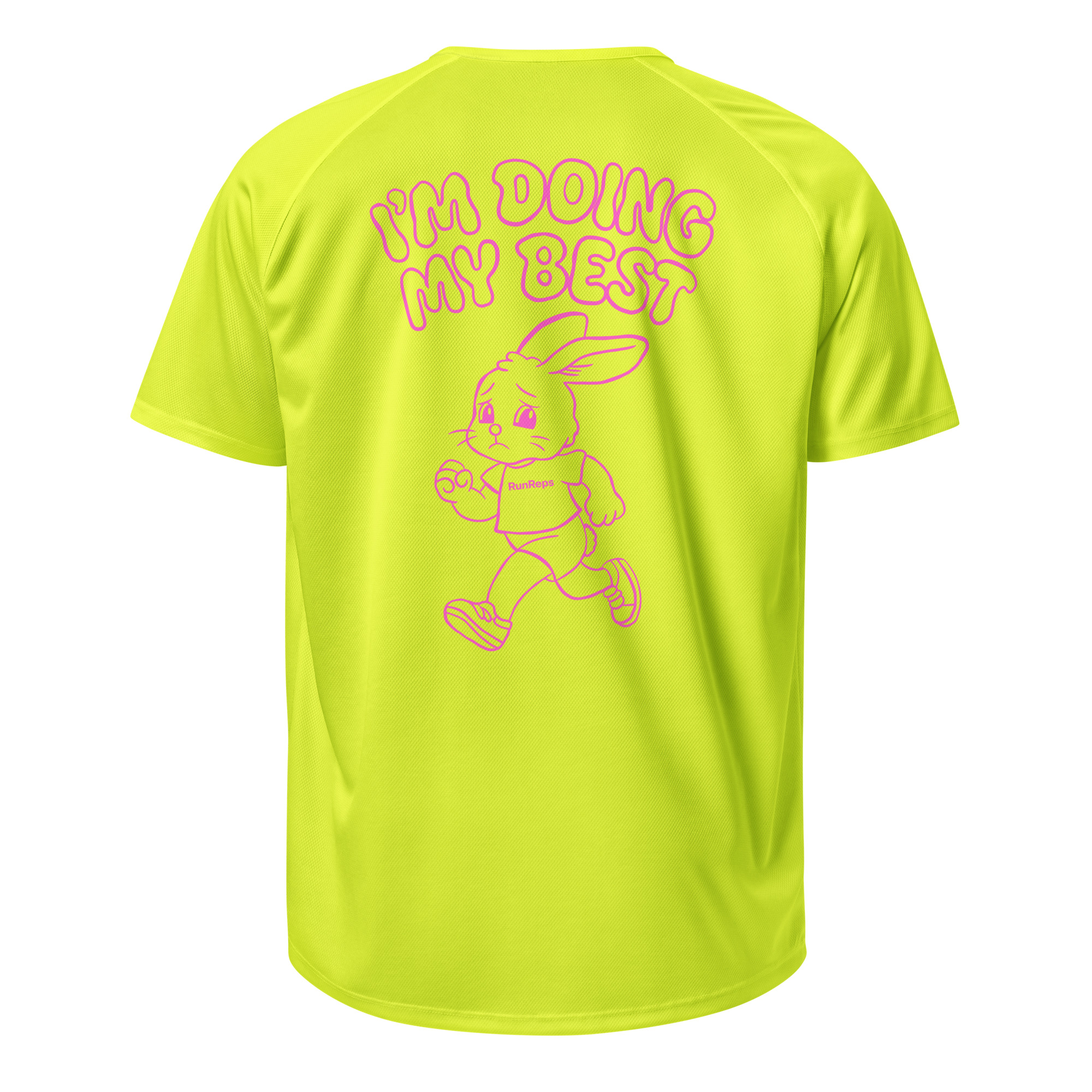
I'm Doing My Best Running Jersey
Lightweight, breathable unisex sports jersey in neon yellow. Designed for runners who keep showing up.
Free worldwide shipping on select orders
RunReps works with retail partners through the Awin affiliate network and earns a commission on qualifying purchases at no extra cost to you.